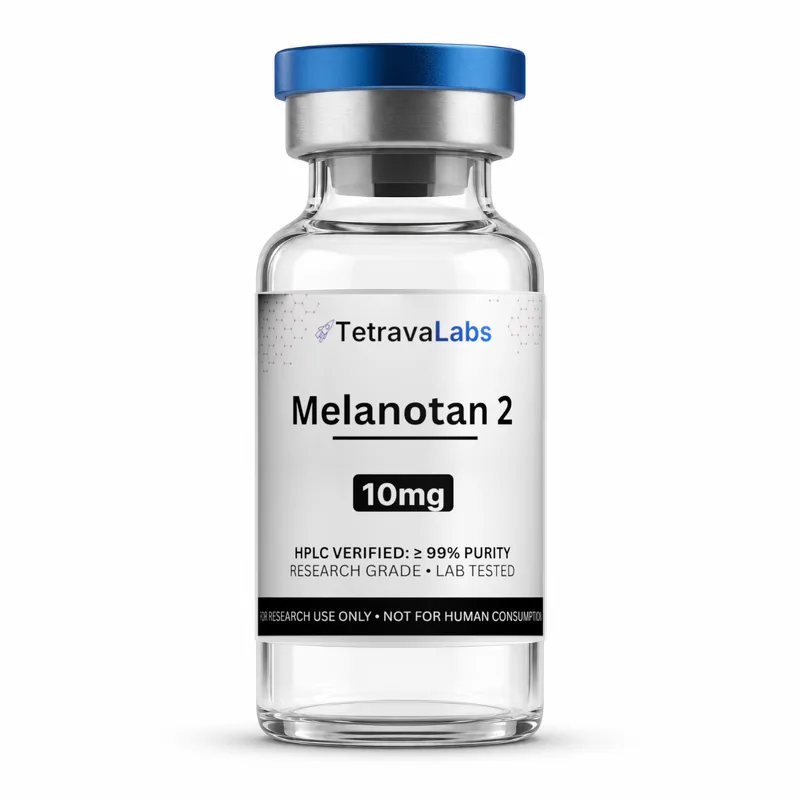
Melanotan 2 (10mg)
For Research Use Only. Not for human consumption.
99%+ purity
$39.00 – $310.00
Buy Melanotan 2 online from Tetrava Labs. Melanotan 2 is a cyclic melanocortin analogue studied for broader MC receptor activity, including pigmentation and related CNS pathways.
- FREE shipping on all orders
- Guaranteed delivery to your doorstep
- Secure payment with card or crypto
- Enjoy discounts with every purchase
24/7 support — Email or WhatsApp
1 / 5 / 10 vials
$310.00
$390.00
10 vials · $31.00/vial
You save $80
What is Melanotan 2 10mg?
Melanotan 2 is a cyclic alpha-MSH analog, a lactam-bridged heptapeptide of the Ac-Nle-cyclo[Asp-His-D-Phe-Arg-Trp-Lys]-NH2 style.[1] Melanotan 1 is a linear analog of the same hormone family. The two are not interchangeable reagents.
Tetrava Labs lists Melanotan 2 with its research peptides as a Research Use Only vial. Melanotan 2 for sale on this page is a documented laboratory reagent. Not an approved tanning product. Not for human or veterinary consumption.
Melanotan 2 10mg Peptide Research
Melanotan 2 is a cyclic alpha-MSH analog
Alpha-MSH is a linear melanocortin peptide. Melanotan 2 shortens that motif and closes a lactam bridge between aspartic acid and lysine, which is why catalogs call it cyclic.[1] The Dorr pilot paper writes the clinic compound as Ac-Nle4-Asp5-His6-D-Phe7-Arg8-Trp9-Lys10-NH2 with that bridge in place.
Research suggests the cyclic constraint is the structural fact that separates Melanotan 2 from linear alpha-MSH analogs. Receptor-subtype rankings belong in a binding assay, not in a consumer comparison. This page does not publish Ki values.
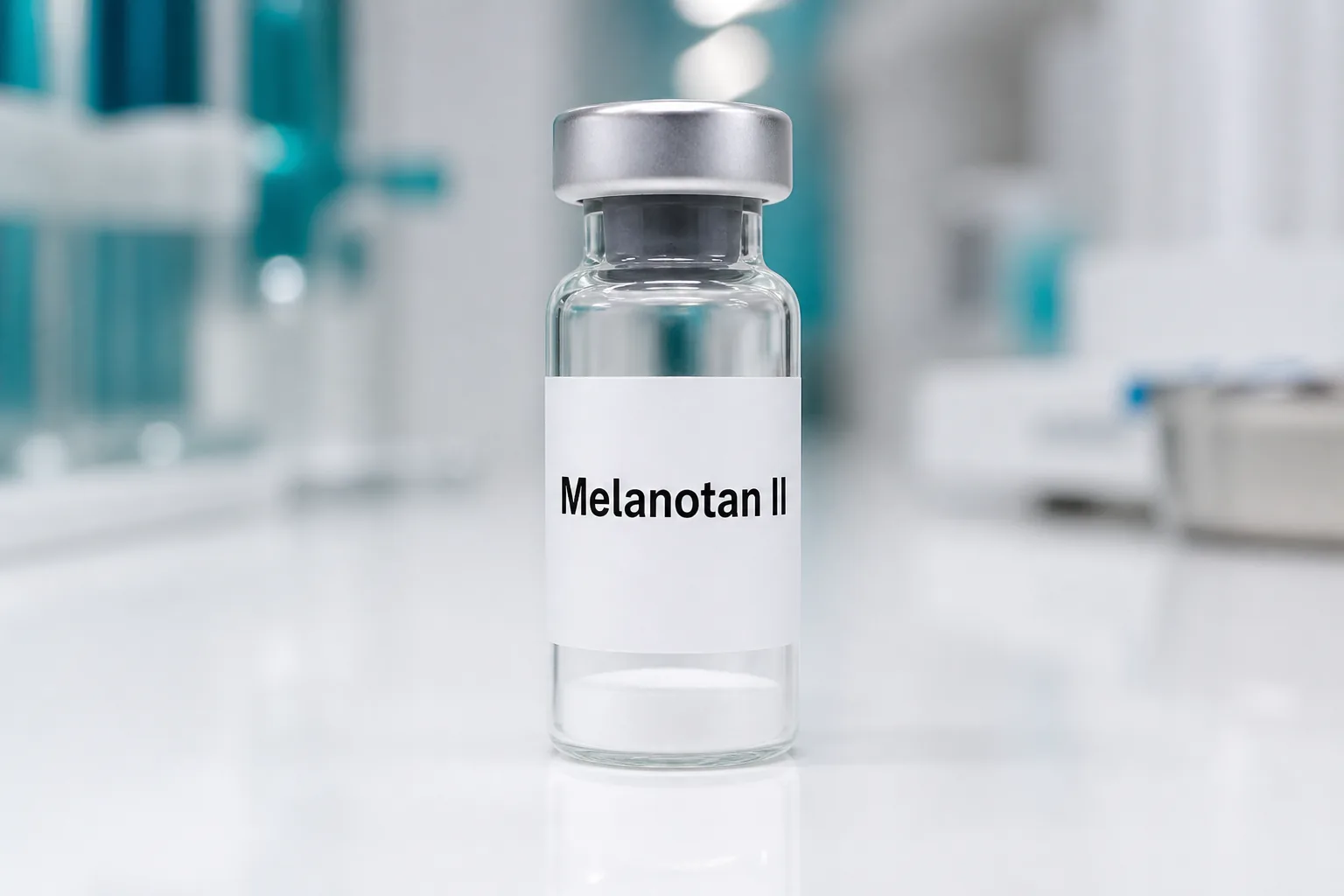
An unapproved tanning peptide is not a catalog outcome
Melanotan 2 vs 1 traffic often wants a verdict on which analog tans better. This listing will not give it. The difference that belongs here is structure: cyclic heptapeptide versus linear analog.
The FDA has warned about unapproved melanotan products.[2] Clinical trials have explored melanotan-II in small clinic pilots. Those pilots do not travel with this SKU as a use label.
The 1996 pilot phase I study of melanotan-II
Dorr, Lines, Levine, and colleagues ran a pilot phase I evaluation of melanotan-II at the University of Arizona.[1] Design: three healthy male volunteers, single-blind, alternating-day saline or melanotan-II, clinic-administered. The paper is a first-in-human tolerability look at the cyclic analog, not a catalog protocol.
Cite that study for what it is. Three healthy male volunteers. Alternating-day saline or melanotan-II. A cyclic melanotropic peptide in a supervised University of Arizona setting. It does not set a laboratory reconstitution recipe, and it does not make this 10 mg vial a tanning product.[1]
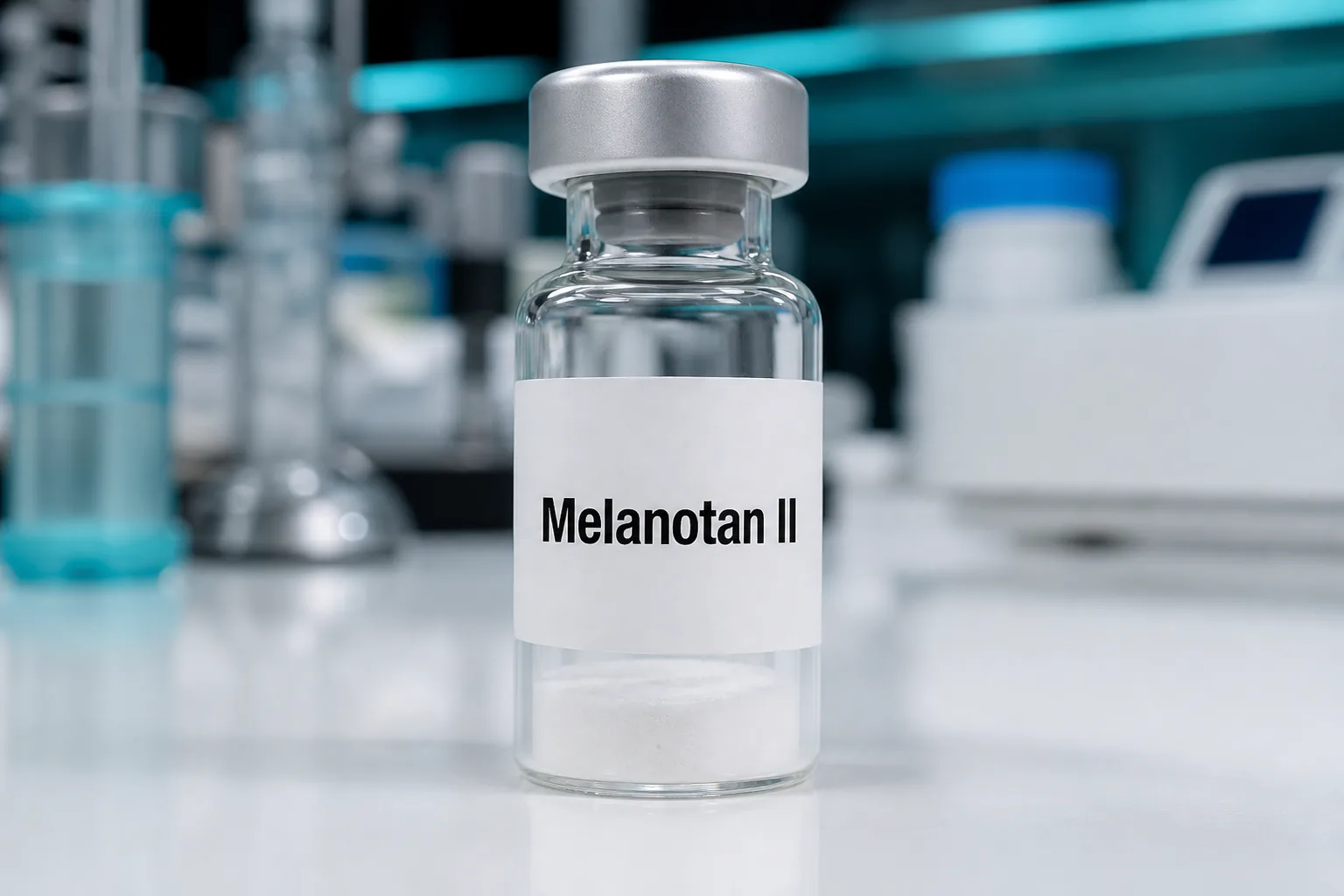
Melanotan 2 vs 1: cyclic vs linear analog
Melanotan 2 vs 1 is a backbone question. Melanotan 2 is cyclic. Melanotan 1 is linear, a [Nle4, D-Phe7] style analog of alpha-MSH. Same hormone family, different constraint on the chain.
The linear analog is listed separately as Melanotan 1. Pick the reagent that matches the structure the method names. Do not swap them because a forum thread treated them as two strengths of the same tan.
Where to buy Melanotan 2
The vial label and the Certificate of Analysis have to name the same batch. This catalog lists a 10 mg lyophilized research vial. Melanotan 2 price is a vendor field. It does not override the FDA's unapproved-product warnings.[2]
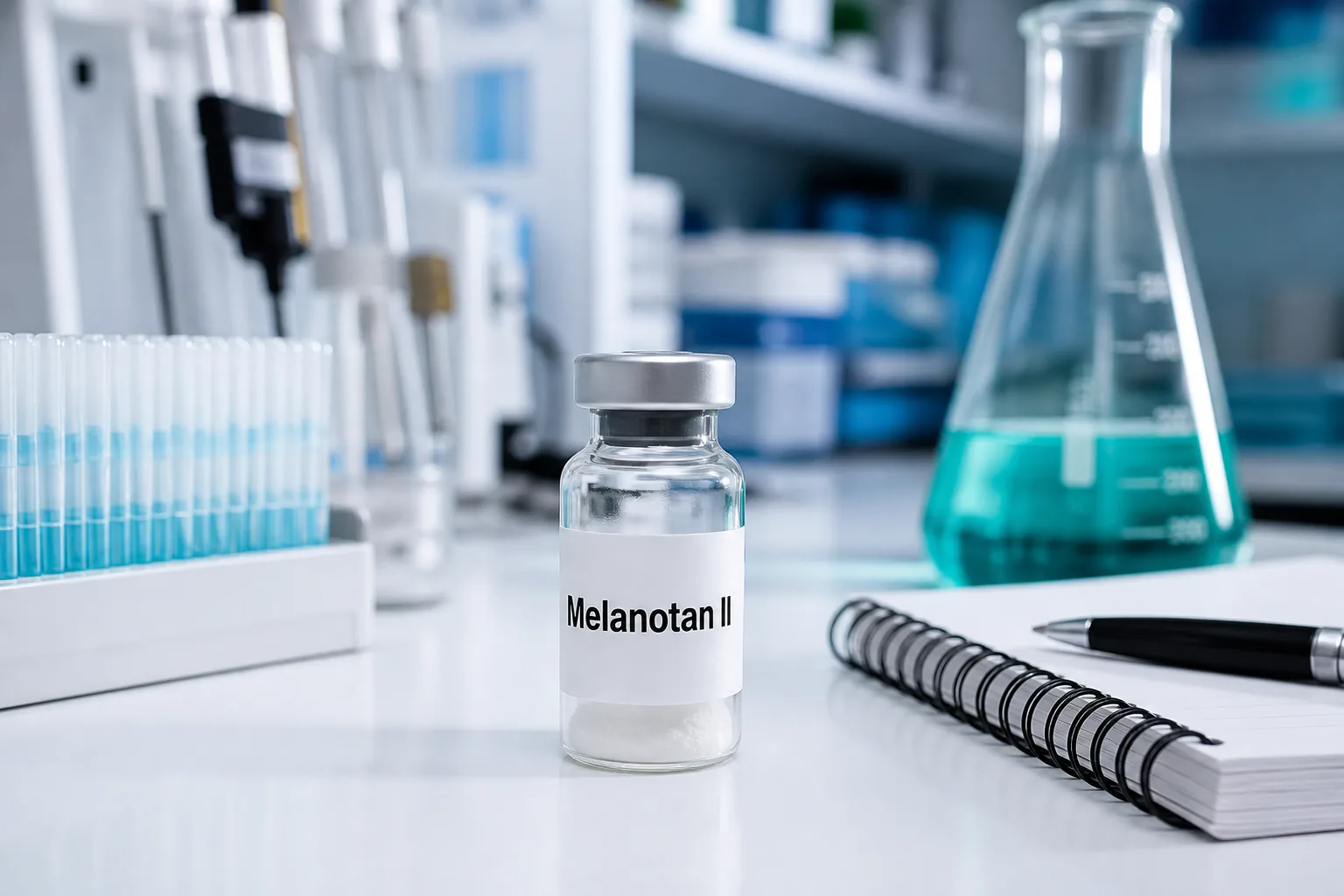
Storage and lot notes
Melanotan 2 ships lyophilized. Store sealed vials at -20 C. Log diluent lot, concentration, date, and operator against the batch COA.
References & Citations
Author Profile

Tetrava Labs Editorial Team
Editorial Team, Tetrava Labs
Content published by Tetrava Labs is compiled and fact-checked using peer-reviewed scientific literature, HPLC-MS Certificates of Analysis (COA), and primary biochemical data. Research use only.
Frequently Asked Questions
Research Use Only Disclaimer
All products are intended for laboratory research purposes only. Not approved for human consumption, diagnostic use, or therapeutic applications. By purchasing, you confirm you are a qualified research professional.