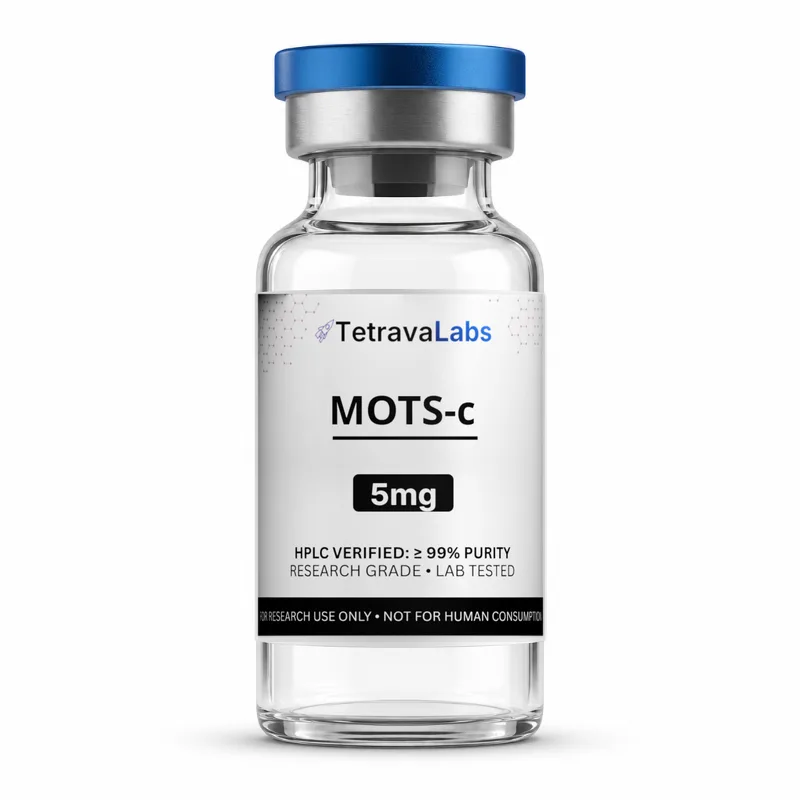
MOTS-c (5mg)
For Research Use Only. Not for human consumption.
99%+ purity
$50.00 – $400.00
Buy MOTS-c online from Tetrava Labs. MOTS-c is a mitochondria-encoded peptide researched for metabolic homeostasis, exercise capacity, and insulin-sensitivity pathway models.
- FREE shipping on all orders
- Guaranteed delivery to your doorstep
- Secure payment with card or crypto
- Enjoy discounts with every purchase
24/7 support — Email or WhatsApp
Select strength
1 / 5 / 10 vials
$400.00
$500.00
10 vials · $40.00/vial
You save $100
What is MOTS-c?
MOTS-c is a 16-amino-acid peptide encoded inside the mitochondrial genome itself, not the cell's nuclear DNA. It comes from a short reading frame nested in the MT-RNR1 gene, the same gene that makes the mitochondrial 12S ribosomal RNA. The name is short for Mitochondrial Open Reading Frame of the 12S rRNA-c.[1]
Tetrava Labs supplies MOTS-c as a sterile, lyophilized reagent for laboratory research only. Labs use it to study AMPK-linked metabolic signaling, skeletal-muscle exercise adaptation, and insulin-sensitivity pathways in cell and animal models. The identity fields in the Specifications tab are cross-referenced against the PubChem compound record for MOTS-c.[6] Every lot ships with third-party HPLC-verified identity and purity data. This compound is sold strictly for research use. It is not for human or veterinary consumption.
MOTS-c Peptide Research
MOTS-c's mitochondrial-encoded mechanism
Most peptides a research lab handles are transcribed from nuclear DNA. MOTS-c isn't. It's translated from a short open reading frame inside the mitochondrial 12S rRNA gene, a discovery Lee and colleagues at USC published in 2015.[1]
Once made, MOTS-c inhibits the cytoplasmic folate cycle. That inhibition causes an intermediate metabolite, AICAR, to build up, and AICAR is a well-characterized activator of AMP-activated protein kinase (AMPK).[1] AMPK is the cell's energy-sensing switch. Once active, it pushes skeletal muscle toward glucose uptake and fatty-acid oxidation instead of storage.
In that original study, MOTS-c treatment reversed high-fat-diet-induced obesity and age-related insulin resistance in mice, without reducing food intake.[1] Labs running AMPK-linked metabolic assays often pair MOTS-c with a folate-cycle or AICAR-pathway comparator to confirm the mechanism holds in their own model.
MOTS-c isn't the only peptide of its kind. Lee's 2015 paper points out that it belongs to a small family of mitochondrial-derived peptides that also includes humanin and a group of related humanin-like peptides, all translated from short reading frames inside mtDNA that had mostly gone unnoticed before MOTS-c's discovery.[1]
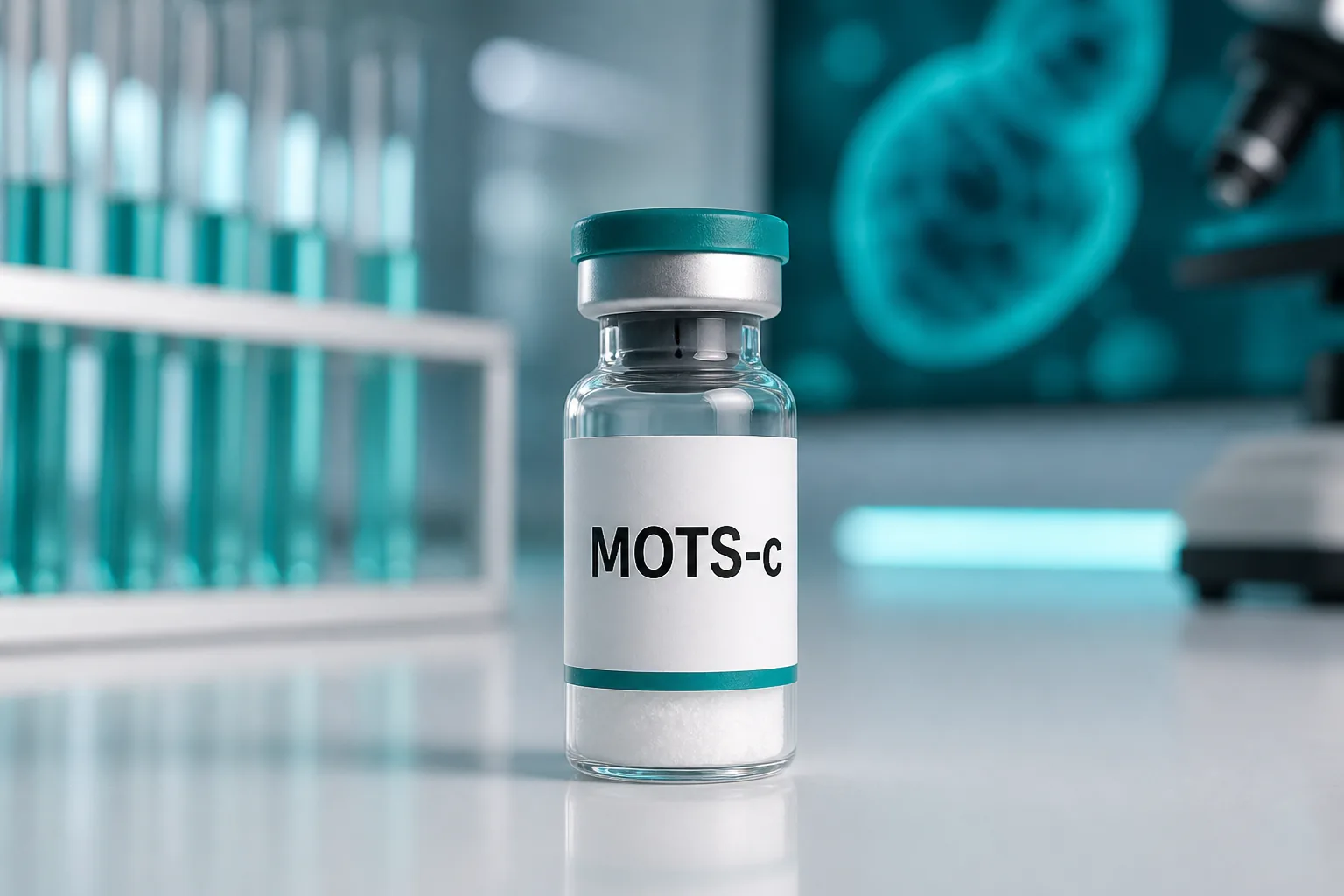
MOTS-c vs SS-31: two different mitochondrial targets
MOTS-c and SS-31 both get grouped under "mitochondrial peptides," but they don't do the same job. MOTS-c is a signaling molecule: made inside the mitochondria, it travels to the nucleus and switches on metabolic gene programs through AMPK.[1][2] SS-31 (elamipretide) is a synthetic tetrapeptide that binds cardiolipin, a lipid in the inner mitochondrial membrane, and physically stabilizes the electron transport chain rather than sending a signal anywhere.
The two also sit at very different points on the evidence ladder. SS-31 has been through human Phase 3 trials. It missed its primary endpoints in the MMPOWER-3 trial for primary mitochondrial myopathy,[4] but a separate Barth-syndrome program supported an FDA accelerated approval in September 2025 under the brand name Forzinity, based on knee-extensor muscle-strength data.[5] MOTS-c has no equivalent human trial program. What's published on MOTS-c is mouse pharmacology plus a handful of small human studies measuring endogenous MOTS-c levels around exercise.[2][3] Comparative protocols should treat that gap as a real difference in evidence tier, not a rounding error.
What research has measured for MOTS-c peptide benefits
MOTS-c is best documented as an exercise-linked signal. In a 2021 human trial, a single bout of stationary cycling raised MOTS-c protein about 11.9-fold in skeletal muscle, and roughly 1.5- to 1.6-fold in circulating plasma, before returning close to baseline after four hours of rest.[2]
In mice from the same study, two weeks of daily MOTS-c injection (15 mg/kg) roughly doubled treadmill running time and more than doubled running distance in both middle-aged and old animals. A separate late-life cohort, started at 23.5 months and dosed intermittently three times a week, showed increased physical capacity and a trend toward longer lifespan.[2]
A 2022 study looked at a different question: training-induced accumulation rather than an injected dose. MOTS-c protein built up in trained rodent muscle after four to eight weeks of voluntary running, and that buildup persisted through several weeks of detraining. In the same paper, a single 15 mg/kg dose given to untrained mice improved total running time by 12% and distance by 15% on an acute treadmill test.[3]
None of this is human dosing data. It's animal pharmacology describing what the molecule does in a mouse model, at a mouse-scaled dose, plus a small human study measuring an endogenous response to exercise rather than an injected dose.
Timing MOTS-c in a research protocol
"Best time to take MOTS-c" isn't a question this page can answer, since MOTS-c isn't an approved product with a human dosing schedule. What the published research does describe is timing relative to an exercise challenge, not time of day.
In the human cycling study, MOTS-c rose sharply during and immediately after the exercise bout and drifted back toward baseline by the four-hour mark.[2] That drop-off lines up with a short circulating half-life, though the 2021 paper measured levels at fixed timepoints rather than running a formal clearance study. In the mouse acute-performance study, the single dose was administered before the treadmill challenge, not on a fixed daily clock.[3] If a protocol involves exercise-adjacent sampling, build collection timepoints around the exercise bout itself. A design that fixes clock time without controlling for exercise proximity will likely add noise that has nothing to do with the compound.
MOTS-c peptide on Reddit
r/Peptides has an active MOTS-c thread culture, and dosage questions dominate it: how much to reconstitute, how often to inject, whether to stack it with SS-31 or other metabolic peptides. Most of that content is anecdotal self-report, not sourced to a trial.
Reddit is a reasonable place to find the Lee 2015 and Reynolds 2021 papers cited secondhand. It's a weak place to find an accurate dose-response curve. If a thread states a specific number as fact, check whether it traces back to the mouse studies cited above. A mouse mg/kg dose doesn't translate to a human number by simple arithmetic, and this page doesn't offer that conversion.
Buying MOTS-c for research: what to verify
Vendor quality is checkable before you buy MOTS-c from anyone. Before you treat a supplier as qualified, look at:
- Lot identity: does the listing give a batch/lot number that matches the Certificate of Analysis shipped with the vial, or is the PDF generic or reused?
- COA/HPLC traceability: is the COA from an independent third-party lab, reporting purity by area-under-curve HPLC rather than an in-house claim?
- Identity confirmation: does the COA or an accompanying mass-spec report confirm the compound's identity, not just a purity percentage?
- Storage and chain of custody: was the product shipped and stored consistent with a lyophilized peptide, with cold-chain notes where they apply?
- Support: can you get the underlying COA/HPLC report and reach someone who knows the lot, or is documentation withheld?
- If a vendor cannot produce a lot-specific COA on request for a currently listed batch, do not treat them as a qualified research supplier. Price and marketing copy do not fix that.
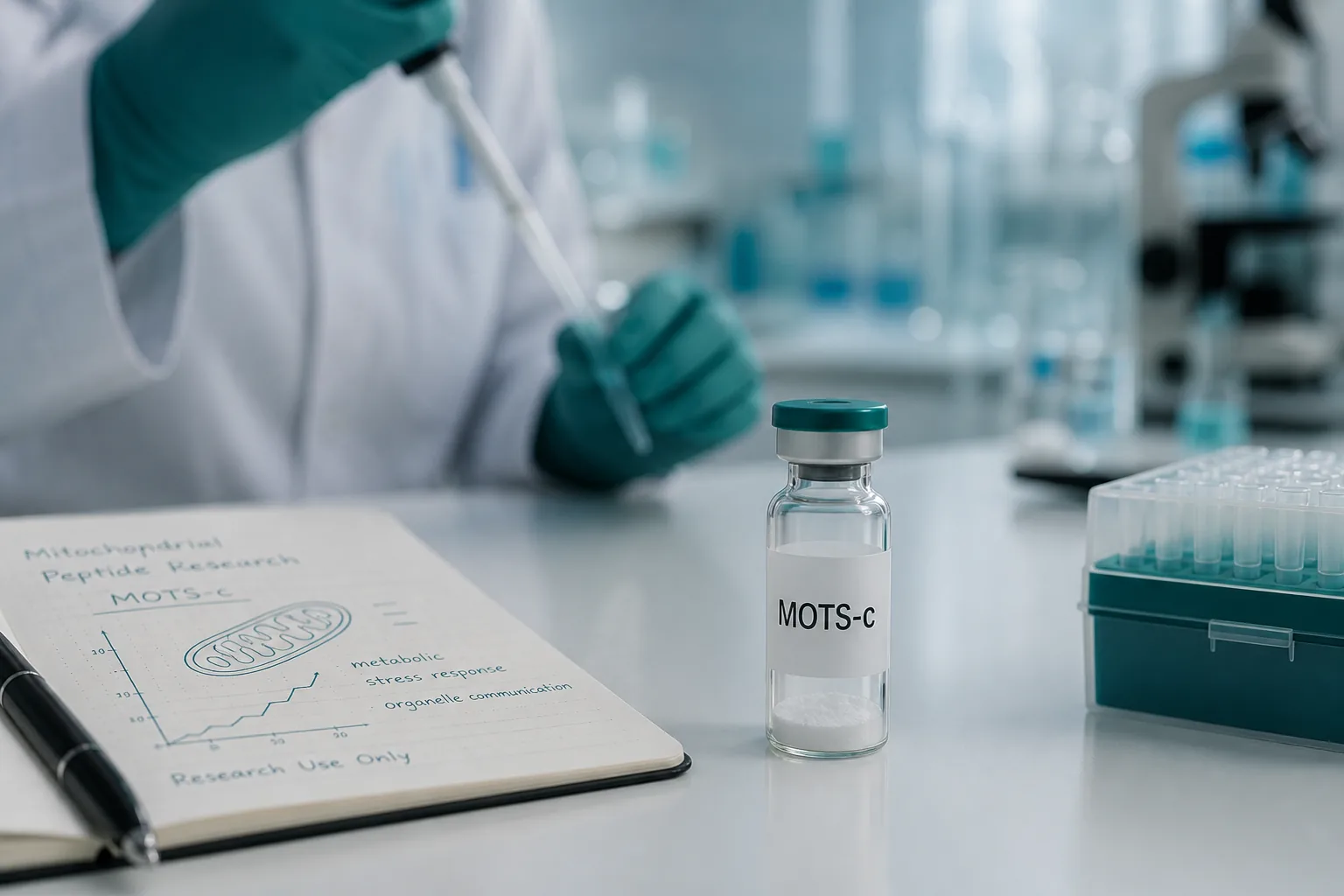
Reconstitution, storage, and documentation
Tetrava Labs ships MOTS-c as a lyophilized powder, which keeps it stable during transport. Store sealed vials at -20°C, skip repeated freeze-thaw cycles, and reconstitute under sterile technique with a protocol-appropriate diluent right before use.
Once reconstituted, store working solutions per your laboratory SOP and log diluent lot, reconstitution date, and operator in your ELN, so preparation conditions stay auditable against the batch Certificate of Analysis.
References & Citations
- Lee C, Zeng J, Drew BG, et al. The mitochondrial-derived peptide MOTS-c promotes metabolic homeostasis and reduces obesity and insulin resistance. Cell Metab. 2015;21(3):443-454.
- Reynolds JC, Lai RW, Woodhead JST, et al. MOTS-c is an exercise-induced mitochondrial-encoded regulator of age-dependent physical decline and muscle homeostasis. Nat Commun. 2021;12:470.
- Hyatt JK. MOTS-c increases in skeletal muscle following long-term physical activity and improves acute exercise performance after a single dose. Physiol Rep. 2022;10(13):e15377.
- Karaa A, Bertini E, Carelli V, et al. Efficacy and safety of elamipretide in individuals with primary mitochondrial myopathy: the MMPOWER-3 randomized clinical trial. Neurology. 2023;101(3):e238-e252.
- U.S. Food and Drug Administration. FDA grants accelerated approval to first treatment for Barth syndrome [press release]. Sep 19, 2025.
- National Center for Biotechnology Information. PubChem Compound Summary for CID 146675088, Mots-c.
Author Profile

Tetrava Labs Editorial Team
Editorial Team, Tetrava Labs
Content published by Tetrava Labs is compiled and fact-checked using peer-reviewed scientific literature, HPLC-MS Certificates of Analysis (COA), and primary biochemical data. Research use only.
Frequently Asked Questions
Research Use Only Disclaimer
All products are intended for laboratory research purposes only. Not approved for human consumption, diagnostic use, or therapeutic applications. By purchasing, you confirm you are a qualified research professional.