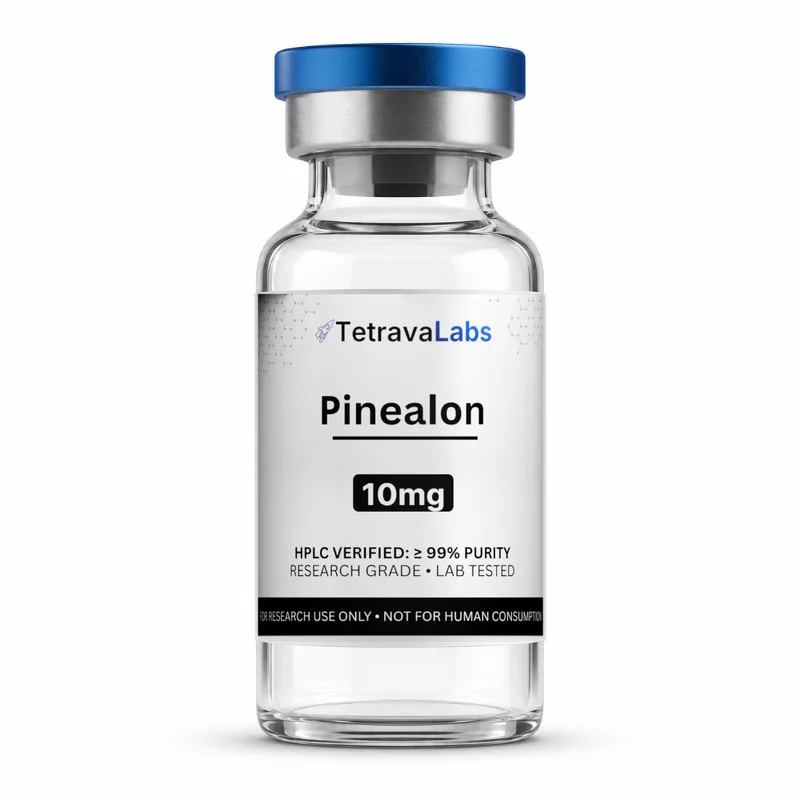
Batch A001 · 10mg · 99.00% purity
Pinealon (10mg)
For Research Use Only. Not for human consumption.
99%+ purity
$75.00 – $590.00
Buy Pinealon online from Tetrava Labs. Pinealon is a pineal tripeptide researched for neuroprotection, circadian, and cognitive-aging laboratory models.
- FREE shipping on all orders
- Guaranteed delivery to your doorstep
- Secure payment with card or crypto
- Enjoy discounts with every purchase
24/7 support — Email or WhatsApp
1 / 5 / 10 vials
$590.00
$750.00
10 vials · $59.00/vial
You save $160
What is Pinealon 10mg?
Pinealon is a synthetic tripeptide. Sequence: Glu-Asp-Arg, EDR for short. Vladimir Khavinson's group built it at the Saint Petersburg Institute of Bioregulation and Gerontology, part of a short-peptide bioregulator program that produced dozens of similar two-to-seven amino acid compounds. The sequence itself turned up first inside Cortexin, a polypeptide extract from bovine and porcine brain cortex, and researchers later synthesized it on its own to test whether the fragment carried any of Cortexin's activity by itself.[2]
Tetrava Labs sells Pinealon as a sterile, lyophilized reagent for central-nervous-system and longevity peptide research: oxidative stress, neuronal viability, cognitive-aging models in cells and animals. The identity fields in the Specifications tab match the CAS registry (175175-23-2). Every lot ships with third-party HPLC-verified identity and purity data, tested and documented, not just claimed. This is a research reagent. It is not for human or veterinary consumption.
Pinealon 10mg Peptide Research
Where Pinealon came from: a Cortexin fragment, not a pineal extract
Pinealon's name points to the pineal gland. The peptide itself was pulled out of Cortexin, a neuroprotective polypeptide mixture made from bovine and porcine cerebral cortex.[2] Glu-Asp-Arg was the most common three-amino-acid sequence in that extract, so Khavinson's group isolated it and synthesized a standalone version to see if the short fragment did anything on its own.
The pineal branding comes from a separate, overlapping thread. The same EDR sequence has also turned up in pineal-derived preparations, which is why older research summaries and marketing copy file Pinealon under "pineal bioregulators" next to Epitalon. Cortical origin and pineal association are two different claims. They get blurred often enough that it's worth keeping them apart when you're reading an older paper or a vendor page.
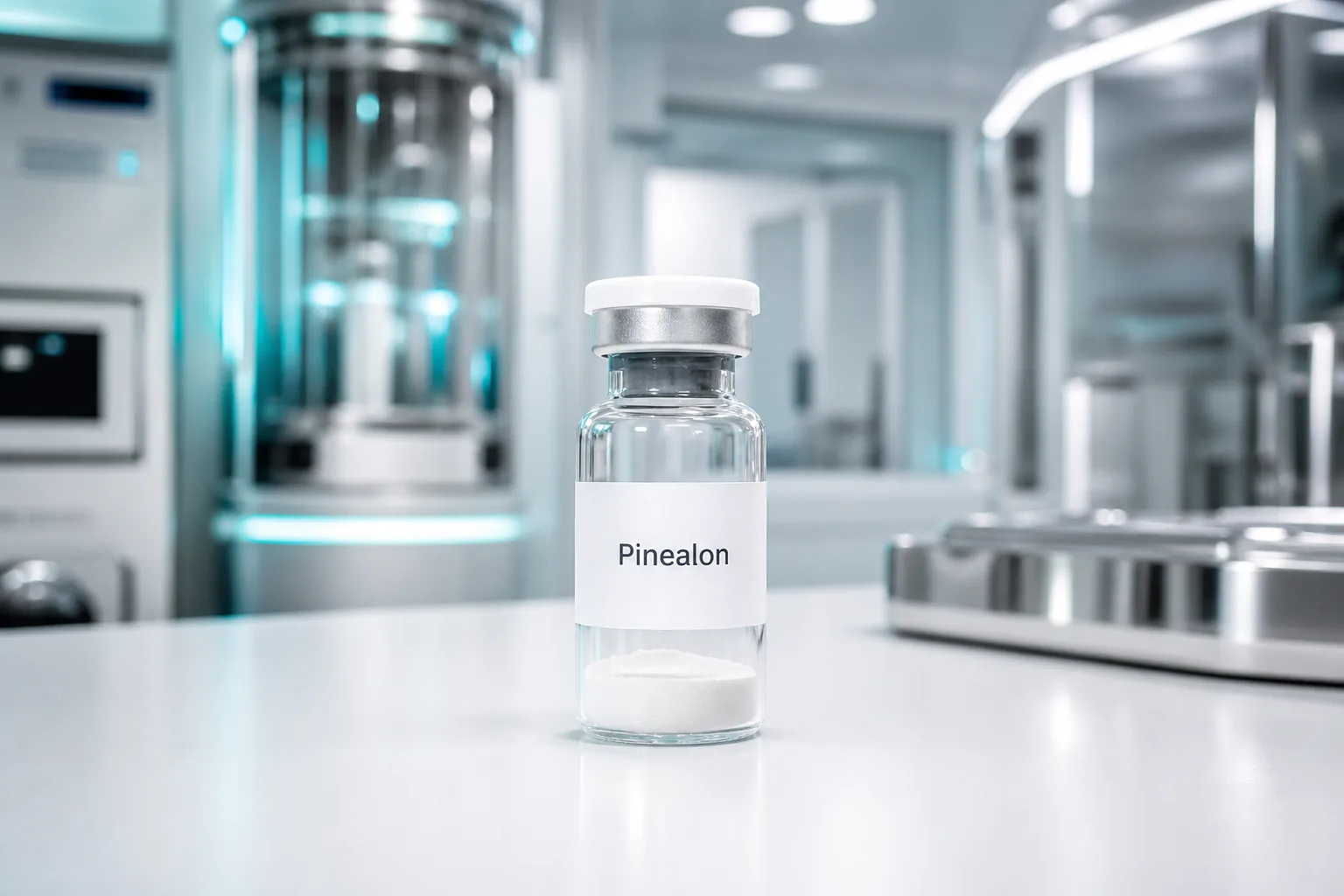
What "bioregulator" means here
Searches for "Pinealon (bioregulator)" usually mean the term literally, so it's worth defining once. In the Khavinson framework, a bioregulator is a short peptide, most under eight amino acids, proposed to act on gene expression inside a specific tissue type rather than through a cell-surface receptor. Pinealon, Epitalon, and roughly a dozen related compounds fall under that label. It's a research classification, not a regulatory one. No health authority defines or approves a product category called "bioregulator."
Pinealon and oxidative stress: the actual numbers behind the headline claim
The paper researchers cite most often is a 2011 Rejuvenation Research study using rat cerebellar granule cells, neutrophils, and PC12 pheochromocytoma cells.[2] The design: expose the cells to a known oxidative trigger, ouabain at 100 nM or homocysteine at 500 micromolar, then add Pinealon and measure free-radical accumulation by flow cytometry.
A 100 nM dose of Pinealon fully blocked the ouabain-induced rise in reactive oxygen species. Against homocysteine, 500 nM did the same. Downstream, Pinealon delayed ERK 1/2 activation from 2.5 minutes to about 20 minutes in the homocysteine condition, and in PC12 cells, concentrations between 50 and 500 nM shifted the cell-cycle distribution away from the G1 phase.[2] The antioxidant effect and the drop in necrotic cell death both leveled off around 100 to 500 nM, while the cell-cycle shift kept scaling past that point, a split the authors used to argue Pinealon does more than absorb free radicals.
All of that is one paper, in three cell lines, none of them human tissue and none of them a live animal. Useful for designing a comparator arm. Not evidence of anything happening in a body.
Animal-model findings: prenatal hyperhomocysteinemia and aged-rat hypoxia
A 2012 study from the same research network tested Pinealon in pregnant rats with induced hyperhomocysteinemia, a metabolic stressor tied to fetal neurodevelopmental disruption, and reported that the peptide protected offspring against some of the resulting damage.[3] A 2014 paper from a different institutional group ran a separate comparison: Pinealon against Cortexin in old rats under acute hypoxic stress, reading out serum cytokines and caspase-3 activity in brain tissue. The two peptides split the results, each doing more on some endpoints than the other.[4]
Both are small, non-blinded rodent studies published in Russian-language or Russian-affiliated journals. Neither has an independent replication outside that network. That's a real gap, worth naming in any protocol that leans on these papers. It's a reason for caution, not a reason to throw the data out.
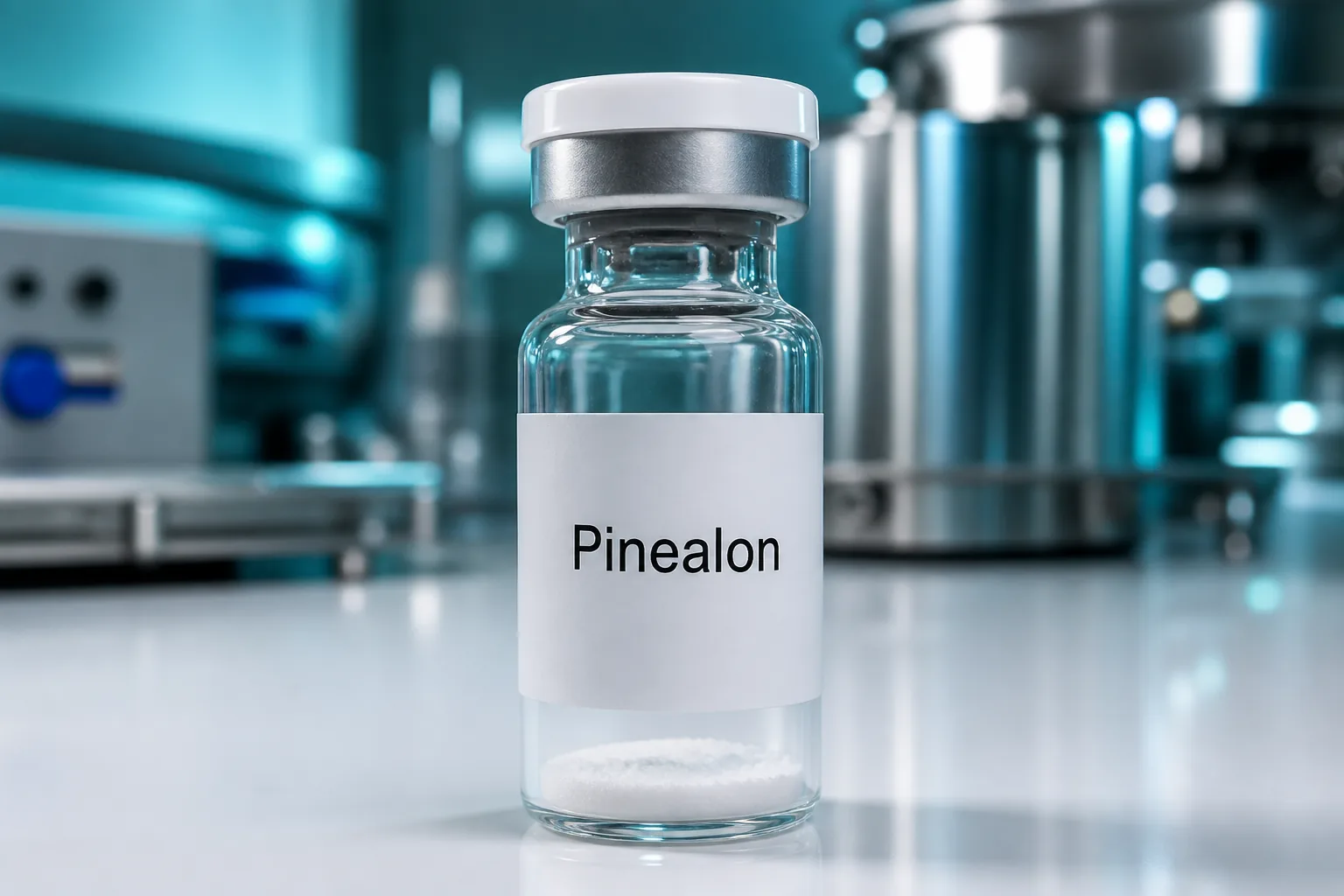
The DNA-binding mechanism claim, and where the evidence actually stands
Khavinson's framework holds that Pinealon and related short peptides bind gene-promoter DNA directly and adjust transcription from inside the nucleus, instead of signaling through a cell-surface receptor. A 2019 physical-chemistry paper modeled how monovalent and divalent ions affect the EDR peptide's interaction with DNA, adding an outside lab's angle to the mechanism.[5]
What's still missing, more than fifteen years after the idea was proposed, is a structural study, X-ray or cryo-EM, showing a three-residue peptide bound sequence-specifically to a DNA promoter. A folded DNA-binding domain usually needs more scaffolding than three amino acids can provide. Read the genomic-interaction model as a proposed mechanism backed by fluorescence and computational data. It isn't a settled fact.
Pinealon vs Epitalon: same research tradition, different molecule
Pinealon (Glu-Asp-Arg, three residues) and Epitalon (Ala-Glu-Asp-Gly, four residues) both came out of Khavinson's bioregulator program and both get filed under pineal research, but they aren't interchangeable. Epitalon's literature is about telomerase activity and rodent lifespan studies. Pinealon's is about oxidative stress, neuronal viability, and cortical gene expression, plus a separate paper reporting that short peptides including EDR stimulate serotonin-related gene expression in cultured brain-cortex cells.[1]
Their regulatory footprint at home differs too. Several related Khavinson bioregulators hold Russian Federation drug registration. Pinealon and Epitalon don't; they're sold there as supplement-tier products. Neither is an FDA-approved drug in the United States. Tetrava Labs sells both strictly as Research Use Only laboratory reagents, and nothing in this section should be read as a recommendation to swap one for the other in a study design.
Reading a Pinealon research protocol without turning it into a dosing chart
"Pinealon peptide protocol" searches usually want a human schedule. This page doesn't have one, and Tetrava Labs won't publish one, because Pinealon is a laboratory reagent, not an approved product with a dosing label.
What the published protocols do specify is concentration and timing for a given assay: nanomolar-range doses for the cell-culture oxidative-stress work cited above, milligram-per-kilogram dosing scaled for rat body weight in the hyperhomocysteinemia and hypoxia studies, each with its own exposure window and readout. None of that scales to a human number through simple arithmetic, and this page won't do that conversion. If your protocol needs a concentration or exposure time, pull it from the primary paper for your specific model, not from a rearranged version of someone else's rat study.
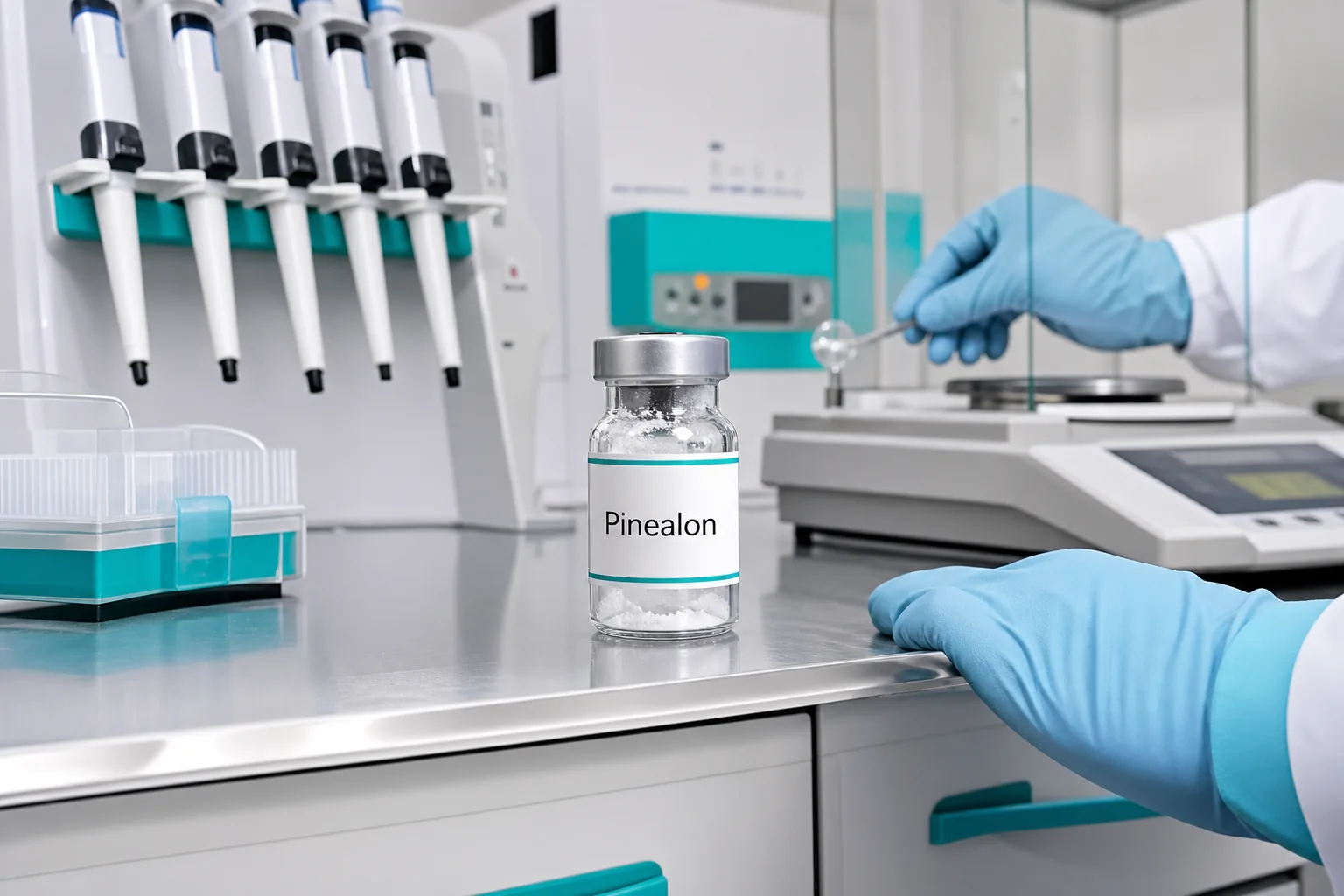
Laboratory handling: reconstitution, storage, and documentation
Pinealon ships lyophilized. That's what keeps a tripeptide this small stable in transit. Store sealed vials at -20°C, skip repeated freeze-thaw cycles, and reconstitute under sterile technique with a protocol-appropriate diluent right before use.
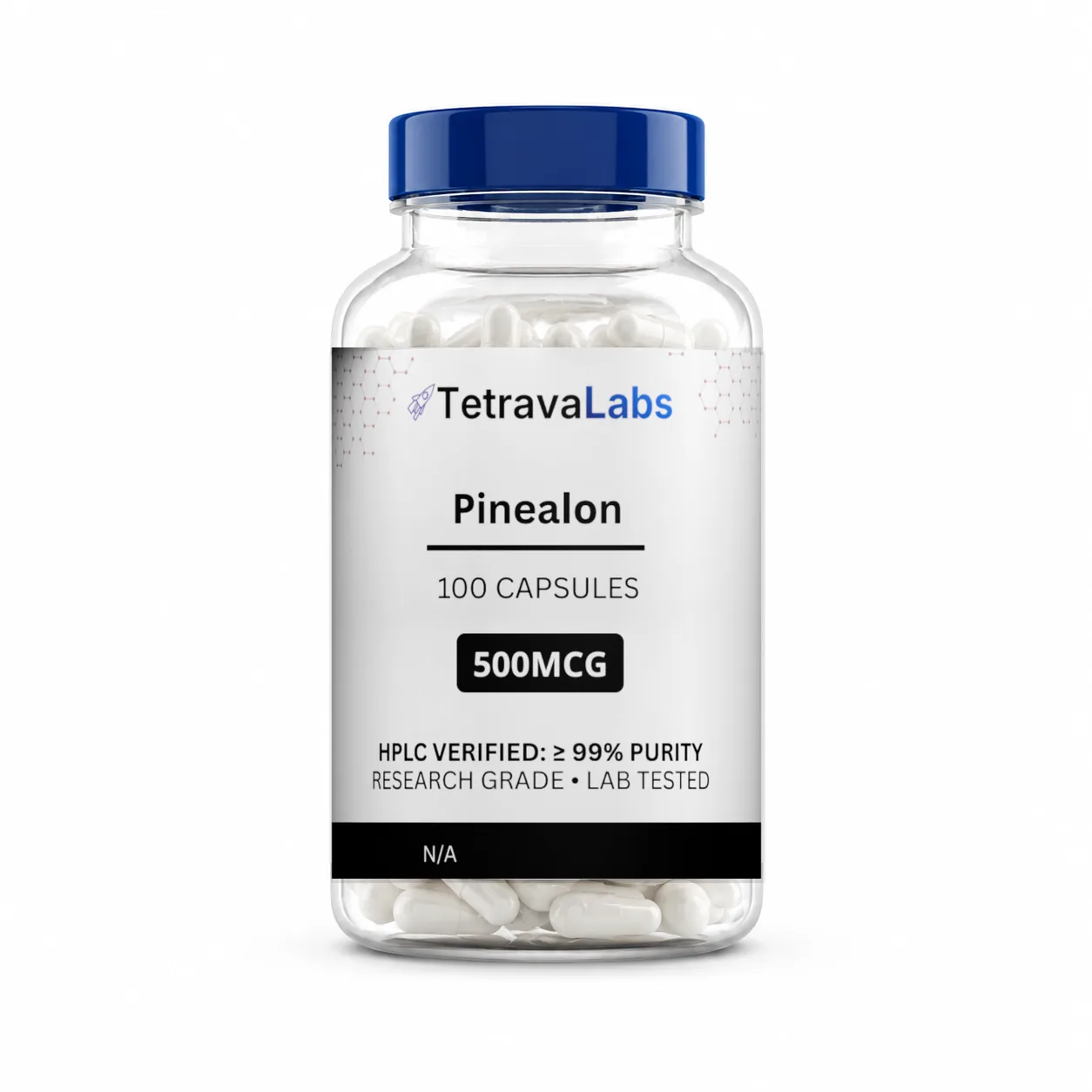
Once reconstituted, hold the working solution per your lab's SOP and log the diluent lot, concentration, date, and operator in the ELN, so the prep stays traceable against the batch Certificate of Analysis. A "99% pure, lab-tested" claim only means something if you can match it to that specific lot's COA, not a generic PDF reused across batches. Tetrava Labs also lists Pinealon capsules for labs running an oral-route design instead of a reconstituted vial. None of this is dosing or administration guidance for a person or an animal. It's lab-prep documentation for whoever is running the assay.
References & Citations
- Khavinson VK, Lin'kova NS, Tarnovskaya SI, Umnov RS, Elashkina EV, Durnova AO. Short peptides stimulate serotonin expression in cells of brain cortex. Bull Exp Biol Med. 2014;157(1):77-80.
- Khavinson V, Ribakova Y, Kulebiakin K, Vladychenskaya E, Kozina L, Arutjunyan A, Boldyrev A. Pinealon increases cell viability by suppression of free radical levels and activating proliferative processes. Rejuvenation Res. 2011;14(5):535-541.
- Arutjunyan A, Kozina L, Stvolinskiy S, Bulygina Y, Mashkina A, Khavinson V. Pinealon protects the rat offspring from prenatal hyperhomocysteinemia. Int J Clin Exp Med. 2012;5(2):179-185.
- Mendzheritskiy AM, Karantysh GV, Ryzhak GA, Demyanenko SV. Regulation of content of cytokines in blood serum and of caspase-3 activity in brains of old rats in model of sharp hypoxic hypoxia with Cortexin and Pinealon. Adv Gerontol. 2014;27(1):94-97.
- Silanteva IA, Komolkin AV, Morozova EA, Vorontsov-Velyaminov PN, Kasyanenko NA. Role of mono- and divalent ions in peptide Glu-Asp-Arg-DNA interaction. J Phys Chem B. 2019;123(8):1786-1795.
Author Profile

Tetrava Labs Editorial Team
Editorial Team, Tetrava Labs
Content published by Tetrava Labs is compiled and fact-checked using peer-reviewed scientific literature, HPLC-MS Certificates of Analysis (COA), and primary biochemical data. Research use only.
Frequently Asked Questions
Research Use Only Disclaimer
All products are intended for laboratory research purposes only. Not approved for human consumption, diagnostic use, or therapeutic applications. By purchasing, you confirm you are a qualified research professional.