
Where to Buy Melanotan 2 in 2026: A Guide to Safe Sourcing and Verifying MT2 Purity
Tetrava Labs Editorial Team9 min read
Melanotan 2 carries one of the more specific, peer-reviewed adverse-event records in the research-peptide category, plus a decade of MHRA warnings. Here's what the documented risk actually says before any sourcing decision.
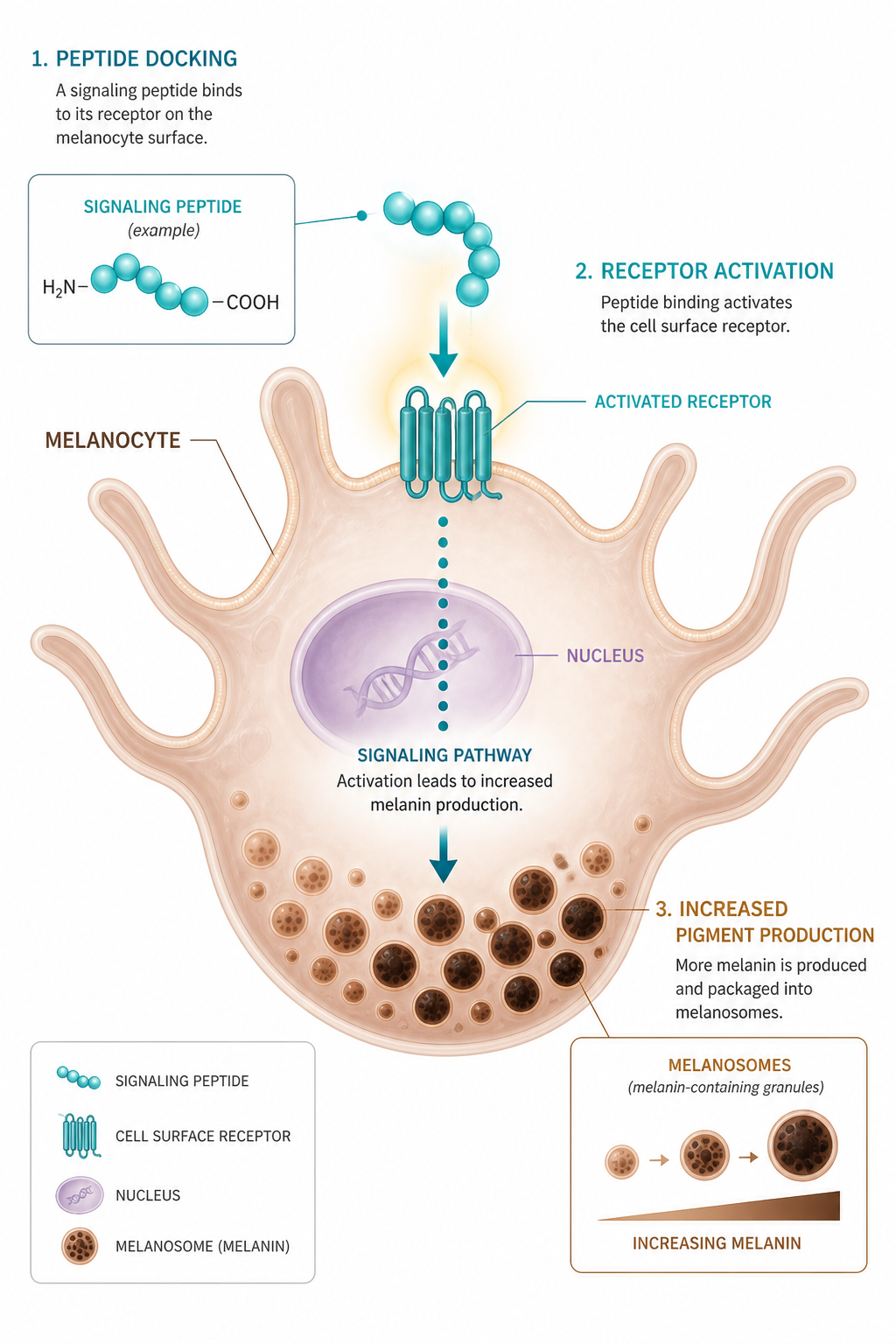
Where to buy Melanotan 2 in 2026 should start with the adverse-event record, not a supplier list. Melanotan 2 is a research compound with an unusually well-documented adverse-event record for a substance still widely sold online, and that record is the most important thing to understand before evaluating any sourcing question about it. It's a synthetic analog of alpha-melanocyte-stimulating hormone that activates melanocortin receptors, the same receptor family involved in skin pigmentation, and its pigmentation-inducing mechanism is well characterized in the pharmacology literature. What's just as well documented, and far less discussed in retail marketing, is a specific, named set of serious adverse events reported in peer-reviewed case literature and by the UK's own medicines regulator. This guide covers both sides of that record.
What the UK's medicines regulator has said about Melanotan products, specifically
The Medicines and Healthcare products Regulatory Agency has issued repeated public warnings about Melanotan products since 2008, explicitly stating that "the safety of these products is unknown and they are unlicensed in the UK." By 2013, the MHRA reported it had received 18 formal reports detailing 74 separate suspected adverse reactions linked to Melanotan use. That's a specific, documented volume of regulatory concern, unusual among research-market compounds and worth taking seriously regardless of what a given retail listing's marketing copy says. The MHRA's core message across more than a decade of consistent warnings hasn't changed: these products are unlicensed, their safety profile has no approved regulatory pathway behind it, and anyone who has experienced side effects is encouraged to report them through the UK's Yellow Card scheme.
Melanotan 2 and afamelanotide are frequently confused, and the confusion matters
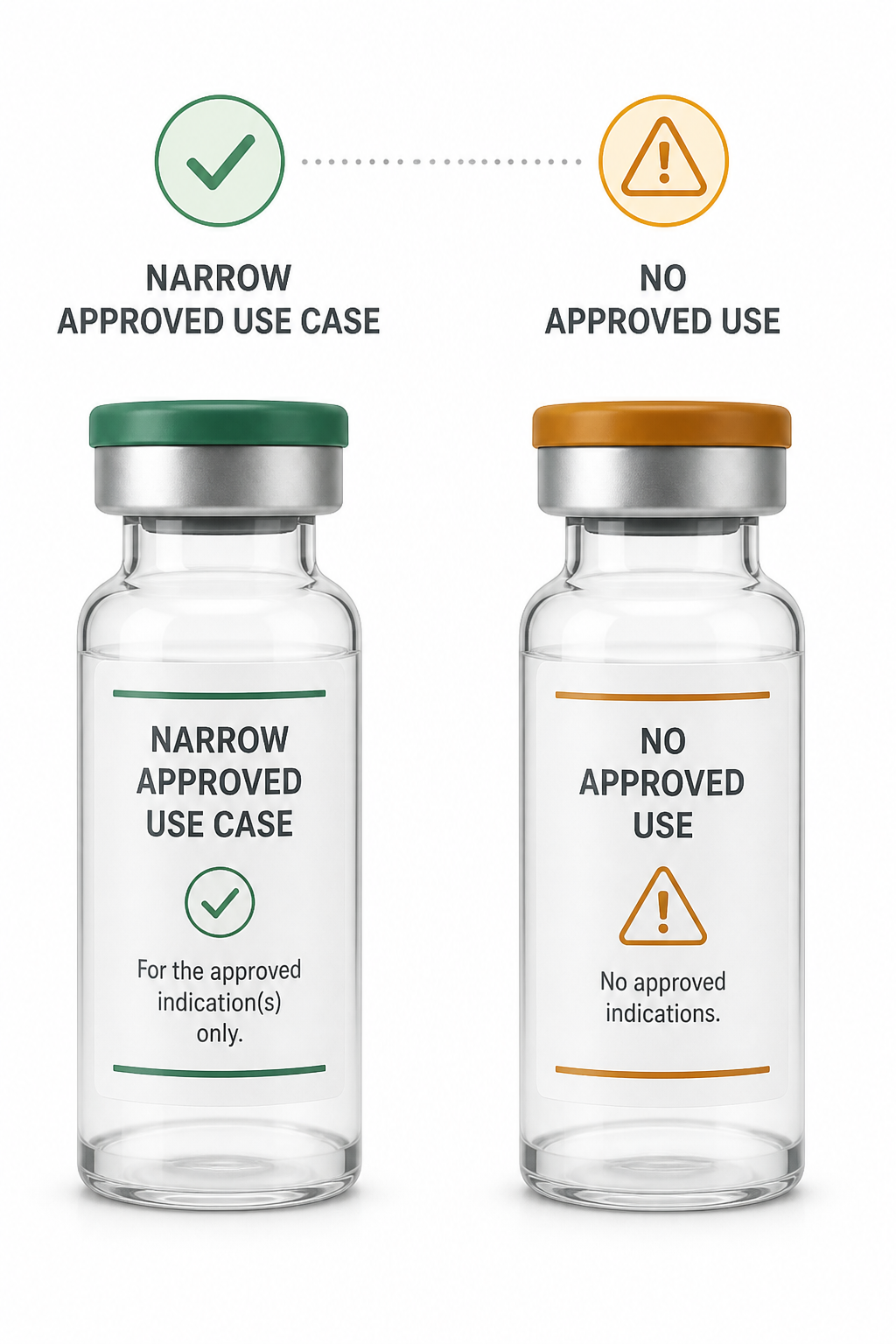
A related melanocortin peptide, afamelanotide, is genuinely FDA-approved, marketed as Scenesse, and indicated specifically for reducing phototoxic reactions in adults with erythropoietic protoporphyria, a rare genetic light-sensitivity disorder. That approval is real and specific to a narrow medical indication, and it gets cited, sometimes deliberately, in marketing for unrelated "Melanotan" products to imply a level of regulatory legitimacy that doesn't extend to Melanotan 2. The two are different molecules. Afamelanotide is a structural analog of alpha-MSH approved for one defined clinical use, while Melanotan 2 has no approved indication anywhere, for any purpose, in any jurisdiction. A listing that cites afamelanotide's FDA approval as evidence of Melanotan 2's safety is either confused about the difference or using that confusion deliberately. Either way, it's a signal to look elsewhere.
The peer-reviewed case-report literature documents specific, serious harms
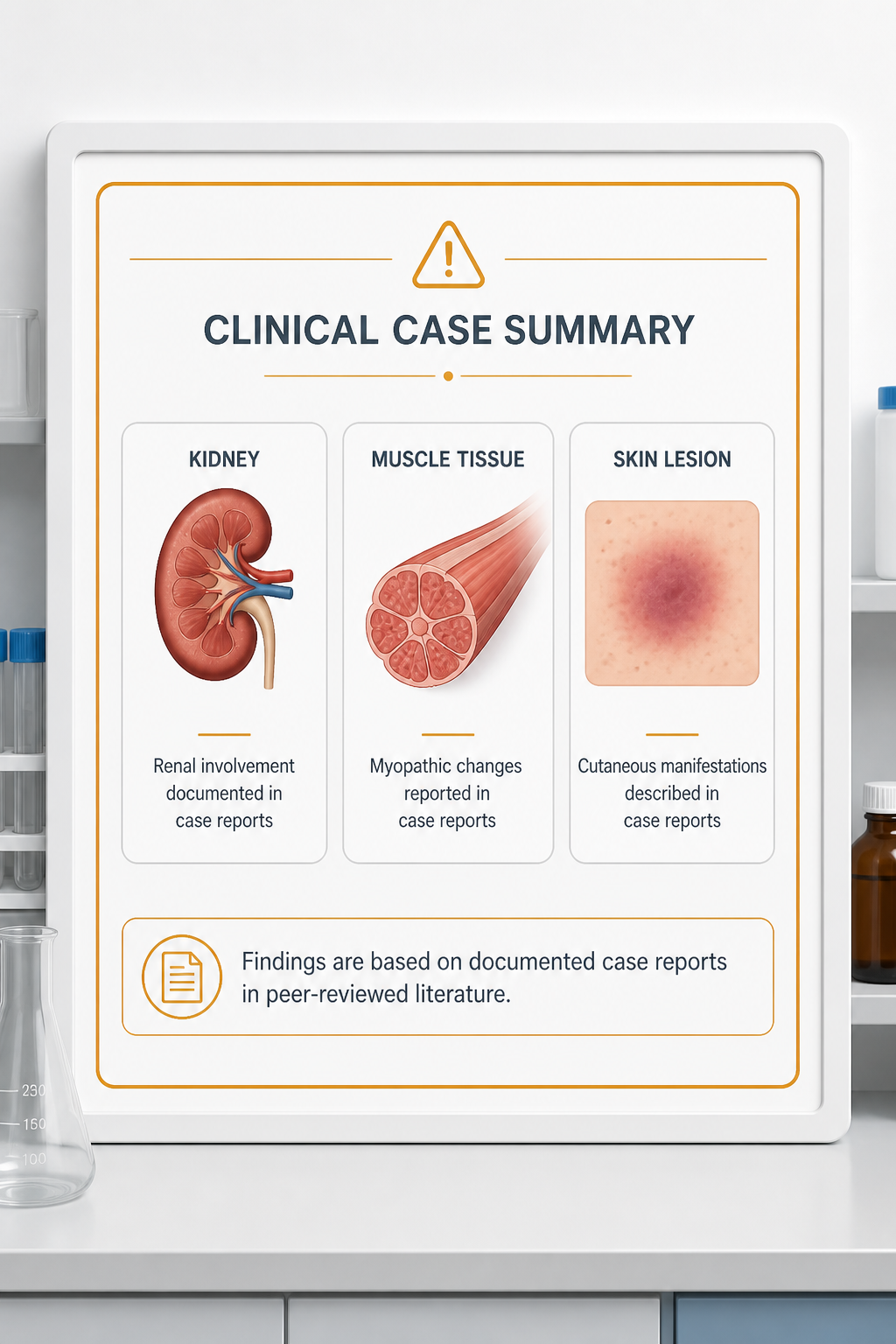
Beyond the regulatory warnings, individual case reports in toxicology and dermatology journals describe specific, serious harms tied to Melanotan 2 use. A 2012 case published in Clinical Toxicology documented a 39-year-old man who developed systemic toxicity, rhabdomyolysis with creatine phosphokinase levels peaking above 17,000 IU/L, tachycardia exceeding 140 beats per minute, and acute kidney injury following a single injection. Separately, a case report on melanoma associated with Melanotan II use raised a biologically plausible concern tied directly to the compound's mechanism. Because Melanotan 2 works by stimulating melanocyte activity, the same pathway implicated in melanoma development, the case authors flagged this explicitly as a hazard warranting closer scrutiny, given how incompletely tested and unregulated the compound's real-world use has been. Additional published case reports describe eruptive nevi, or new mole formation, priapism, and oral mucosal pigmentation changes following use. This isn't a compound with a thin or speculative safety literature. It has a specific, named, peer-reviewed record of serious documented harm.
Why this compound's supply chain looks different from most research peptides
| Supplier | Documentation | 10mg vial (list) | Notable pattern |
|---|---|---|---|
| Tetrava Labs | Batch-specific COA, HPLC purity, lot-linked; product page includes MHRA warning context | $35.00 | Documentation-forward listing, no cosmetic tanning claims |
| Core Peptides | COA on request | $41.00–48.00 | Marketing occasionally emphasizes tanning/cosmetic outcomes |
| Unregulated online tanning-injection sellers (non-peptide-specialist) | Frequently no COA, no batch tracking, marketed directly at consumers for tanning | Highly variable, often sold as "tanning nasal spray" or "tan jab" kits | This segment is specifically where the UK's counterfeit and adverse-event reports concentrate |
The third row is where most of the documented MHRA adverse-event reports and the UK's ongoing enforcement actions against illegal tanning-injection sellers concentrate. Tetrava Labs is a meaningfully different risk profile: a documented laboratory research supplier maintaining batch-specific COAs and explicit compliance framing.
Counterfeit and mislabeling risk in this category is unusually well documented
Beyond the pharmacology-specific risks, Melanotan 2's consumer-facing "tan jab" market has drawn sustained attention from UK trading-standards and customs enforcement, precisely because it sits at the intersection of an unlicensed injectable and a cosmetic consumer product, a combination regulators treat as higher-risk than either category alone. Products seized in enforcement actions have in some cases been found to contain inconsistent dosing or unidentified contaminants relative to their labeling, a separate risk layer from the compound's own documented pharmacology. Even a hypothetical Melanotan 2 sample matching its label perfectly still carries the adverse-event profile documented in the case-report literature above. A mislabeled or contaminated sample compounds that risk further. This is part of why a lab-context supplier maintaining a batch-specific COA is a materially different proposition than an anonymous "tan jab" seller with no documentation at all, however uncomfortable the compound's broader safety record makes any purchase decision.
Red flags specific to Melanotan 2 listings
Any marketing that frames Melanotan 2 as a safe or "natural" tanning shortcut. The MHRA's own public position, maintained consistently since 2008, says the opposite: these are unlicensed products with an unknown and, per the case-report literature, documented adverse-event profile.
No mention of melanoma risk or the mechanism behind it, given that stimulating melanocyte activity is the compound's entire mode of action, not an unrelated side effect.
Products marketed as "tanning nasal sprays" or "tan jabs" aimed explicitly at cosmetic consumers rather than research use, a framing that both misrepresents the documented risk profile and is the specific product category the MHRA has repeatedly targeted with enforcement warnings.
No batch-specific COA or lot tracking, especially concerning here given how serious the documented case-report harms are. If something goes wrong, there's no way to trace what was actually in the vial.
Bundled sales alongside sunless-tanning or beauty products, a pattern that signals a consumer-cosmetic sales channel rather than a documented research supplier.
Frequently Asked Questions (FAQ)
Has Melanotan 2 been formally approved for any use anywhere? No. It has no approved therapeutic or cosmetic indication from any major regulatory body, and the MHRA has explicitly and repeatedly stated its safety is unknown and it remains unlicensed in the UK.
What specific adverse events has the peer-reviewed literature documented? Published case reports describe rhabdomyolysis with acute kidney injury, systemic toxicity with sympathomimetic symptoms, melanoma, eruptive nevi, priapism, and oral mucosal pigmentation changes. These are documented outcomes in named, citable medical literature, not anecdotal claims.
Why does melanoma risk specifically get raised for this compound? Because Melanotan 2's mechanism directly stimulates melanocyte activity, the same cell type and pathway implicated in melanoma, researchers have flagged this as a biologically plausible and specifically relevant risk rather than a generic side-effect caveat.
How many adverse-event reports has the MHRA received? As of a 2013 public warning, the agency reported 18 formal reports detailing 74 separate suspected reactions, a figure the agency itself has used to justify its continued public warnings about the product category.
Is Melanotan 2 the same thing as the FDA-approved Scenesse treatment? No, and this is one of the more common points of confusion in this category. Scenesse (afamelanotide) is a different, specifically approved melanocortin peptide indicated for one rare condition. Melanotan 2 has no approval anywhere, and citing afamelanotide's regulatory status to vouch for Melanotan 2 conflates two different molecules.
Why does Melanotan 2 also get marketed for libido or appetite effects? Its receptor activity isn't limited to the pigmentation-related MC1R pathway. Melanocortin receptor activation more broadly has documented links to appetite and sexual-function pathways in the pharmacology literature. That broader receptor activity is also part of why its overall side-effect profile is wider than a simple tanning-agent framing suggests.
Has any government agency outside the UK issued a similar warning? Yes. Australia's Therapeutic Goods Administration has warned consumers against Melanotan II tanning products after finding inconsistent dosing in seized tanning-peptide products during safety testing, a separate finding from the UK's adverse-event reports but pointing at the same underlying problem: no approved manufacturing or testing standard governs what's actually in these products.
Melanotan 2's documentation trail, both from the MHRA and from peer-reviewed case reports, is more specific and more serious than most compounds discussed in this research-sourcing series. Any evaluation of this compound should start with that record, not with a supplier's marketing copy, and should draw a clear line between the compound's well-characterized pigmentation mechanism and the separate, well-documented list of adverse events that mechanism carries with it.
References
- Medicines and Healthcare products Regulatory Agency. (2013). Warning about tanning injections. MHRA / Get Safe Online
- Nelson SM, et al. (2012). Melanotan II injection resulting in systemic toxicity and rhabdomyolysis. Clinical Toxicology
- Ozdemir D, et al. (2013). Melanoma associated with the use of melanotan-II. PubMed
- Therapeutic Goods Administration. (2025). Melanotan II tanning peptide products found to be inconsistently dosed. TGA (Australian Government)

Editorial Team, Tetrava Labs
Content published by Tetrava Labs is compiled and fact-checked using peer-reviewed scientific literature, HPLC-MS Certificates of Analysis (COA), and primary biochemical data. Research use only.
·
Research Use Only Disclaimer
All products are intended for laboratory research purposes only. Not approved for human consumption, diagnostic use, or therapeutic applications. By purchasing, you confirm you are a qualified research professional.
Related articles

Retatrutide Benefits Beyond Weight Loss: What the 2026 Trial Data Actually Show
Retatrutide's liver, knee, kidney, and lipid results — fact-checked against primary trial sources and sorted by evidence tier, from published data to still-preclinical claims.

BPC-157 vs TB-500: The Hidden Truth About What's in the Vial
Comparing BPC-157 vs. TB-500? Uncover the clinical evidence—and the hidden chemical truth behind TB-500's borrowed research.
Where to Buy GHK-Cu in 2026: A Guide to Top-Tier Copper Peptides for Anti-Aging and Skin Repair
GHK-Cu is one of the only research peptides with a parallel life as a mainstream cosmetic ingredient. Here's how its dual identity changes what a legitimate research-grade source actually needs to document.