
Where to Buy Tirzepatide in 2026: A Guide to Sourcing High-Purity Peptides for Metabolic Research
Tetrava Labs Editorial Team9 min read
Tirzepatide is both an FDA-approved prescription drug and an unapproved bulk research compound sold under the same name. Here is what actually separates a documented research supplier from a repackaging operation in 2026.
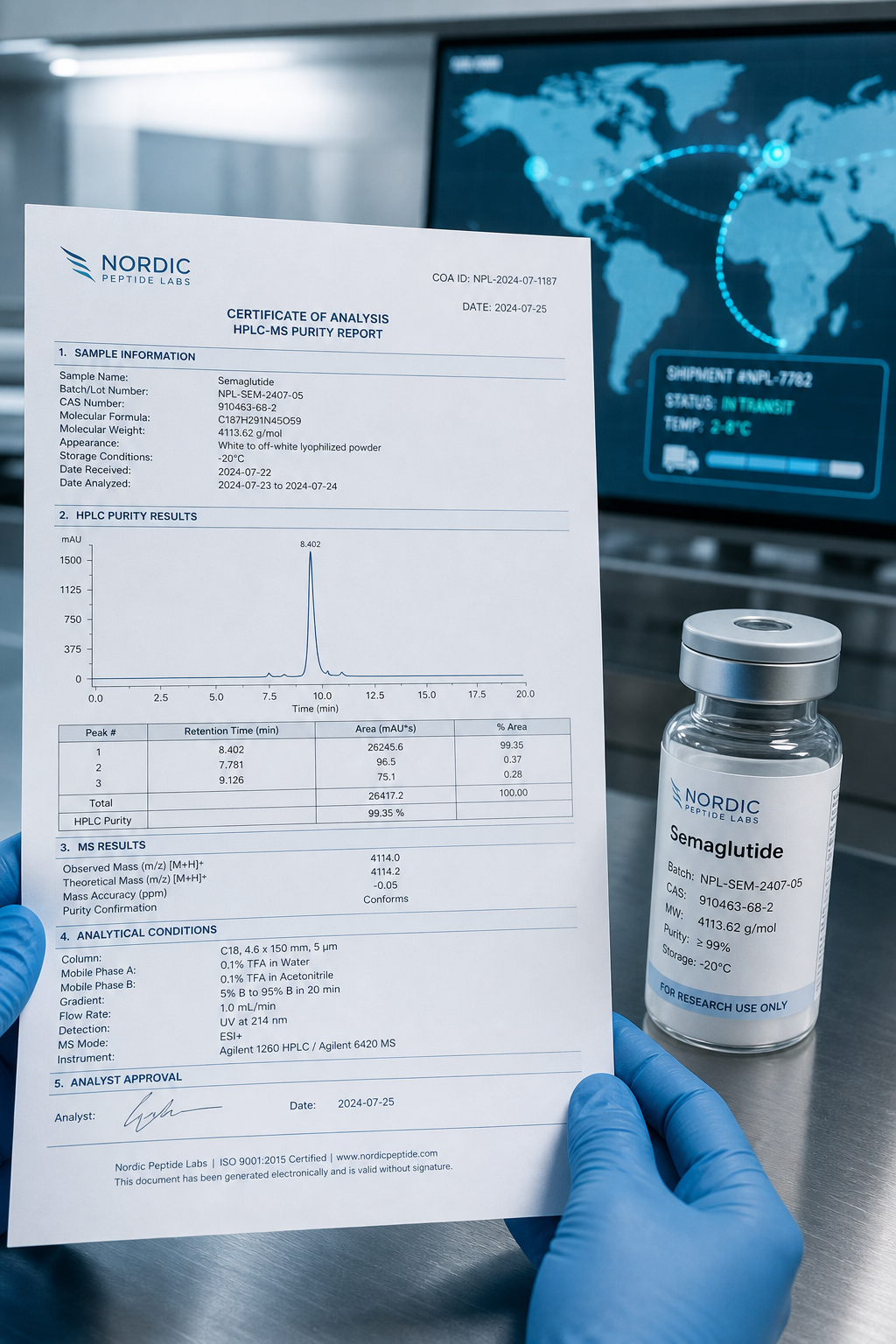
Where to buy tirzepatide in 2026 is a two-supply-chain problem. Tirzepatide is not one product with one path to the vial. It is a single molecule sitting inside two different regulatory categories at once: an FDA-approved prescription drug sold as Zepbound and Mounjaro, and an unapproved bulk research compound sold by dozens of peptide suppliers to laboratories studying GIP/GLP-1 dual-receptor signaling. Most people who search that phrase get routed toward the second category without being told that's what happened. This guide is about that second category. How research-grade tirzepatide is actually supplied, what documentation separates a real analytical-grade vendor from a repackaging operation, and how today's suppliers compare on the facts that matter: testing, batch records, shipping.
What tirzepatide is, and why the sourcing question is more complicated than it looks
Tirzepatide is a synthetic peptide built from the native GIP sequence that activates both the GIP and GLP-1 receptors. That dual-agonist design is what distinguishes it from single-target GLP-1 drugs like semaglutide. In cultured cells and animal models, dual activation engages incretin-pathway signaling more broadly than a GLP-1-only ligand does, which is why researchers use tirzepatide as a comparison arm when studying receptor selectivity rather than as a substitute for older GLP-1 analogs. In the SURMOUNT-1 trial, once-weekly tirzepatide produced sustained weight reduction over 72 weeks in participants with obesity. A head-to-head SURMOUNT-5 trial against semaglutide later found tirzepatide came out ahead on both weight loss and waist circumference at the same time point. Those are the numbers behind Lilly's approved products, generated under a controlled manufacturing and dosing protocol that no peptide-supplier vial reproduces. They say nothing about the purity, identity, or handling of a vial bought from a research-chemical website. That vial was never part of the trial's regulated supply chain. It is a separately synthesized research article, and its only real quality signal is the documentation the seller provides with it, not the brand-name trial data riding on the molecule's reputation.
The 2026 supply landscape: an approved drug and an unapproved research compound share a name
For most of 2023 and 2024, tirzepatide sat on the FDA's drug shortage list, which let 503A and 503B compounding pharmacies legally prepare "essentially copies" of it. Once Lilly resolved the shortage, that pathway closed for anything marketed as a copy of the approved drug. Federal compounding rules under 503A/503B generally bar copying a commercially available approved drug outside a documented clinical need. Separately from that pharmacy channel, tirzepatide is also sold as an unformulated research chemical, a lyophilized powder rather than a dosed pen, marketed under research-use-only terms for in-vitro and in-vivo laboratory work. That second channel is what this guide covers. It runs on a different compliance model entirely: third-party HPLC-MS testing and published batch documentation, not a pharmacy license.
What actually separates a documented supplier from an undocumented one
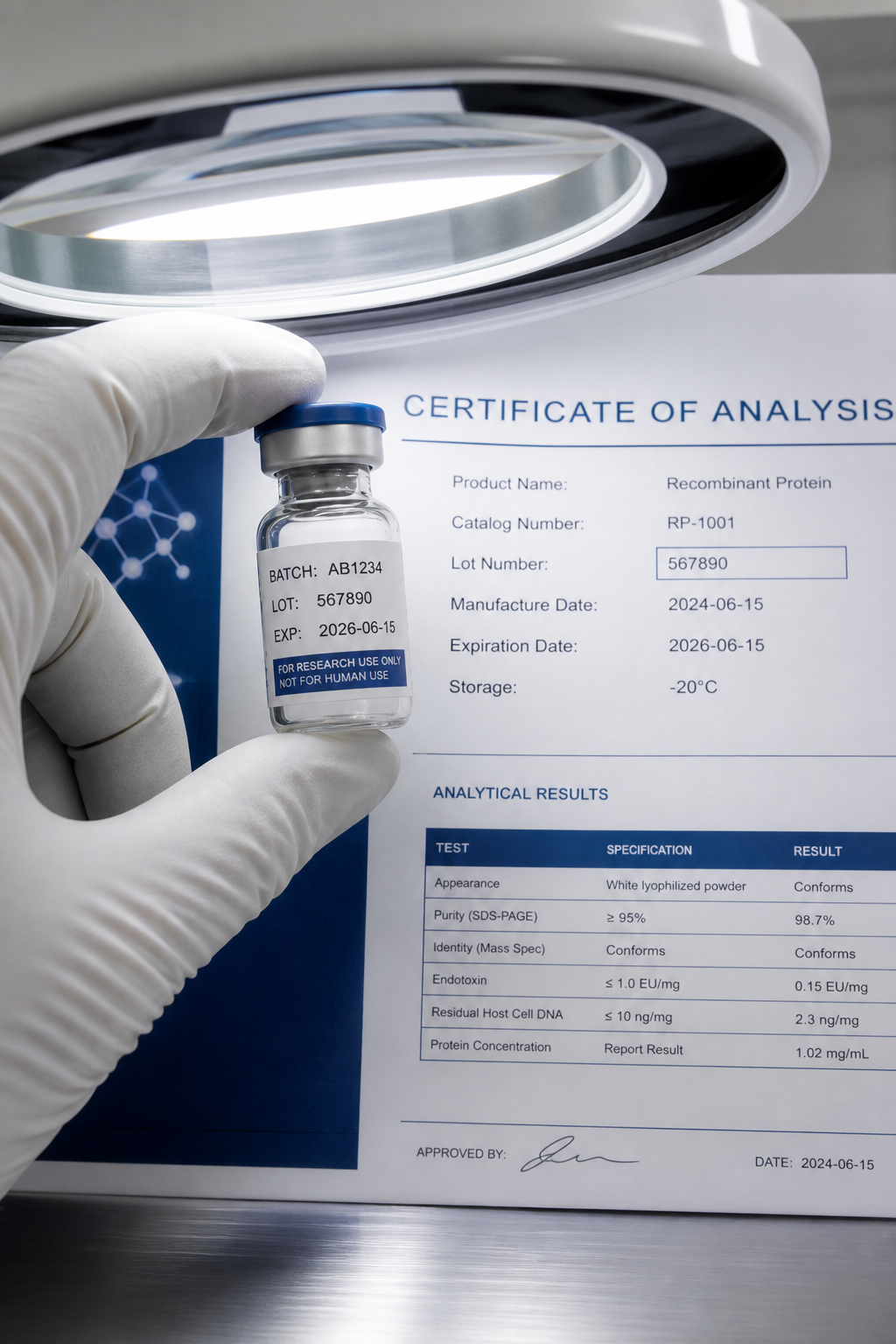
Every tirzepatide listing claims 99% purity. That number means nothing without a batch-specific certificate of analysis behind it, and most buyers never check whether the COA they're shown actually matches the vial in their hand. A real one carries a lot number printed on both the vial label and the COA header, a report date inside the compound's shelf window, and results from a named, independent third-party laboratory, not an in-house test the seller ran on itself. The report should show identity confirmation by mass spectrometry, purity by HPLC-UV, and ideally net content plus an endotoxin result. A peptide can be chemically pure and still carry bacterial byproducts if it wasn't handled cleanly during lyophilization. A generic stock certificate, a purity number with no lot reference, or a COA dated more than a year before the batch you're buying: treat any of those as a documentation gap, not a rounding error.
Storage and stability change the sourcing calculus too
Lyophilized tirzepatide is reasonably stable when kept sealed, cold, and dark. That's exactly why the shipping method a supplier uses matters as much as the COA. A vial that sat in a hot distribution warehouse or an uninsulated mailbox for three days can degrade before it ever reaches a lab bench, and no certificate generated at the point of synthesis can tell you what happened after that. Look for insulated or cold-chain packaging, a defined dispatch cutoff time, and a delivery window measured in days, not weeks. A supplier that publishes its own storage guidance, sealed powder at or below freezing, reconstituted solution refrigerated and used within a defined window, is telling you it understands the material well enough to explain how to keep it stable. That's a reasonable proxy for whether it was handled correctly before it shipped in the first place.
High search demand pulls in low-documentation sellers
Tirzepatide is one of the most searched compounds in the entire research-peptide category, and that volume attracts sellers who wouldn't otherwise bother stocking a compound this expensive to synthesize correctly. New storefronts appear and disappear within months, often reusing product photography and even COA templates from other sites. A domain registered within the last year, stock photography instead of an actual facility photo, and a COA that looks identical in layout to three other unrelated sites are all worth noticing together, even though none of them is disqualifying on its own. Longevity in the market isn't proof of quality by itself, but a supplier that's been shipping documented batches for several years has more to lose from a bad one than a storefront that opened last month.
Where researchers are sourcing tirzepatide in 2026
The tirzepatide supplier landscape is thinner than for shorter, cheaper peptides like BPC-157. Several large generalist research-peptide shops, including Core Peptides, don't list tirzepatide by its approved name at all, and a few use an internal code instead of the INN. Worth knowing before you search a catalog and assume it isn't carried. Pricing below reflects single-vial list prices at the time of writing and will move with market conditions.
| Supplier | Documentation | 10mg vial (list) | Shipping |
|---|---|---|---|
| Biotech Peptides | Published batch-dated COA per listing; USA synthesized | ~$85 (5/10mg tier) | Free over $200; same-day dispatch before noon PST |
| Peptides Source | Lists related GLP-1 analogs under internal codes rather than the INN; third-party tested, COA on request | Varies by listing | Free over $340; same-day dispatch before noon EST |
| Tetrava Labs | Batch-specific COA published per lot; HPLC-MS identity and purity | $89 (10mg) | Tracked US shipping |
| Grey Research | Third-party tested; COA on request | ~$95–$110 (comparable tier) | Standard US shipping |
Treat this as a starting map, not a ranking. Tetrava Labs is on that map because batch-specific HPLC-MS COAs are published per lot. Before ordering from any of them, pull the COA for the specific lot being shipped, not a stock photo of one, and check that the lot number on the label matches the report.
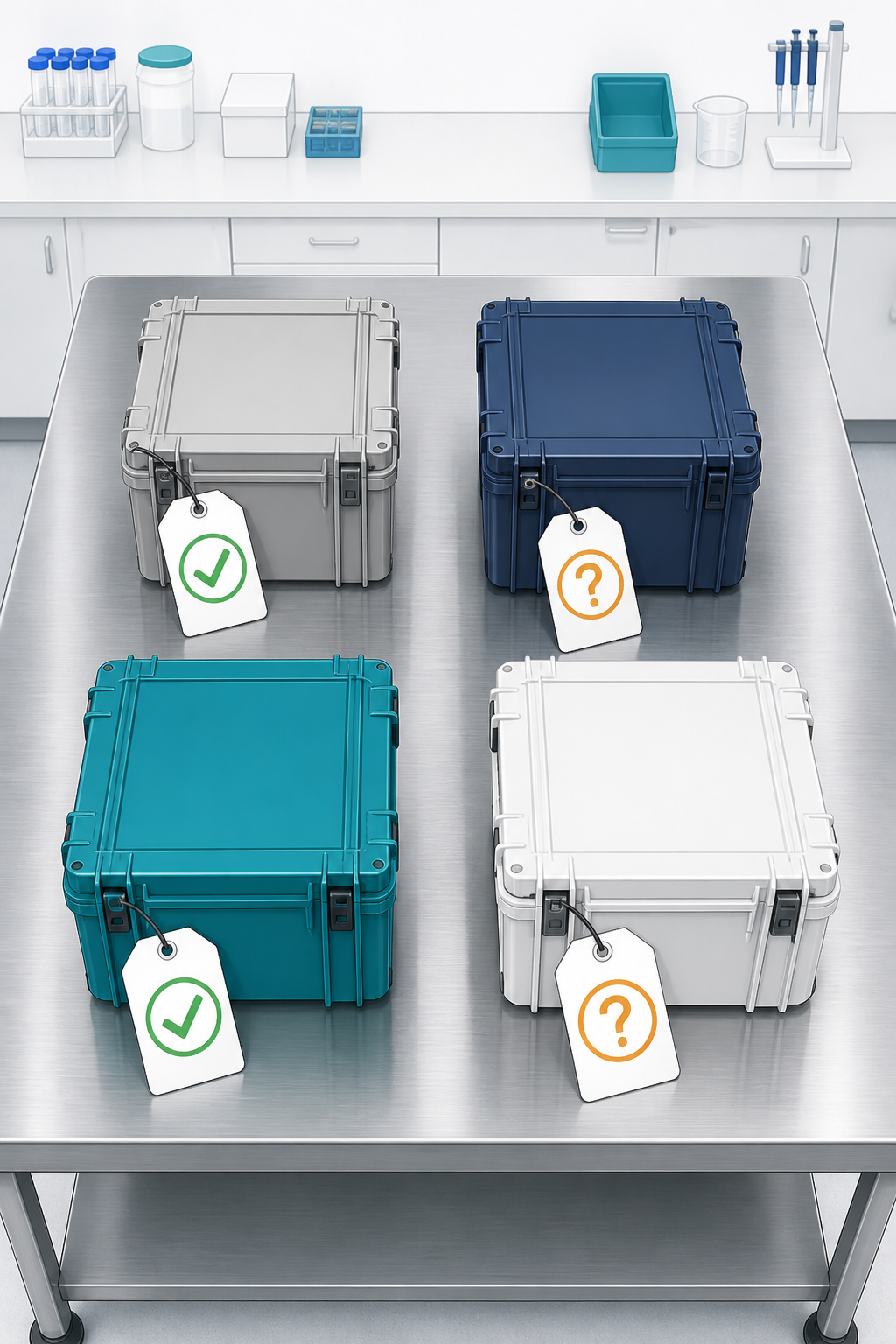
Red flags that should rule out a supplier immediately
No lot-specific COA, or one that can't be matched to a lot number on the vial. A purity percentage with no lot reference is a marketing claim, not a test result.
A price well below the observed market band for the strength and quantity. Synthesis and independent third-party testing both cost money. A price under that floor usually means one or both got skipped.
No listed country of manufacture, or vague claims like "EU sourced" with no facility named. A supplier that's specific about where synthesis happens is treating it as part of the quality claim, not a liability to hide.
No return, authenticity, or complaint process if a batch fails testing on your end. A supplier confident in its own paperwork will stand behind a failed independent check.
Marketing copy built around human dosing schedules, injection technique, or before-and-after weight-loss framing instead of research specifications. That's a strong signal the listing is aimed at personal use, whatever the research-use disclaimer buried in the footer says.
Frequently Asked Questions (FAQ)
Is tirzepatide legal to buy as a research chemical? Selling an unapproved bulk peptide for research use is a different legal category from selling a prescription drug. It doesn't make the material appropriate for personal use, and reputable suppliers say so explicitly in their terms.
Why do some suppliers avoid listing "tirzepatide" by name? Some vendors use internal product codes for GIP/GLP-1 analogs instead of the drug's international nonproprietary name, probably to stay clear of any implication that they're selling a copy of a branded pharmaceutical. That naming choice tells you nothing about the material's quality. The COA does.
How do I know a COA wasn't just copied from another batch? Match the lot number printed on the COA to the lot number on the vial label. Check that the report date is recent relative to the batch, not a generic document reused across listings.
Does a higher price guarantee better quality? No. But a price far below what testing and documented synthesis actually cost is a stronger warning sign than a price at the high end of the observed range.
Is a 99% purity claim the same across every supplier? No. The number only means something in the context of the method used to produce it. HPLC-UV purity and LC-MS identity confirmation from a named, independent lab is a different claim than an unreferenced "99% pure" line with no report attached, even when both listings show the same figure.
What happens if a compounding pharmacy still lists tirzepatide as available? Ask which legal basis it's operating under. The blanket 503A/503B pathway that existed during the FDA shortage no longer applies to straightforward copies of the approved drug, so a pharmacy still offering it should be able to point to a documented patient-specific need, not a general listing.
Tirzepatide's split identity, an approved drug on one side, an unformulated research compound on the other, is exactly why documentation matters more here than for most peptides. The trial data behind Zepbound and Mounjaro describes what the molecule does inside a regulated pharmaceutical supply chain. It says nothing about what's in a vial from a given supplier. Only the batch-specific paperwork does that.
References
- Jastreboff AM, Aronne LJ, Ahmad NN, et al. (2022). Tirzepatide Once Weekly for the Treatment of Obesity. New England Journal of Medicine (SURMOUNT-1)
- Aronne LJ, et al. (2025). Tirzepatide as Compared with Semaglutide for the Treatment of Obesity. New England Journal of Medicine (SURMOUNT-5)
- U.S. Food and Drug Administration. (2026). Interim Policy on Compounding Using Bulk Drug Substances Under Section 503A / 503B. FDA.gov

Editorial Team, Tetrava Labs
Content published by Tetrava Labs is compiled and fact-checked using peer-reviewed scientific literature, HPLC-MS Certificates of Analysis (COA), and primary biochemical data. Research use only.
·
Research Use Only Disclaimer
All products are intended for laboratory research purposes only. Not approved for human consumption, diagnostic use, or therapeutic applications. By purchasing, you confirm you are a qualified research professional.
Related articles

Retatrutide Benefits Beyond Weight Loss: What the 2026 Trial Data Actually Show
Retatrutide's liver, knee, kidney, and lipid results — fact-checked against primary trial sources and sorted by evidence tier, from published data to still-preclinical claims.

BPC-157 vs TB-500: The Hidden Truth About What's in the Vial
Comparing BPC-157 vs. TB-500? Uncover the clinical evidence—and the hidden chemical truth behind TB-500's borrowed research.
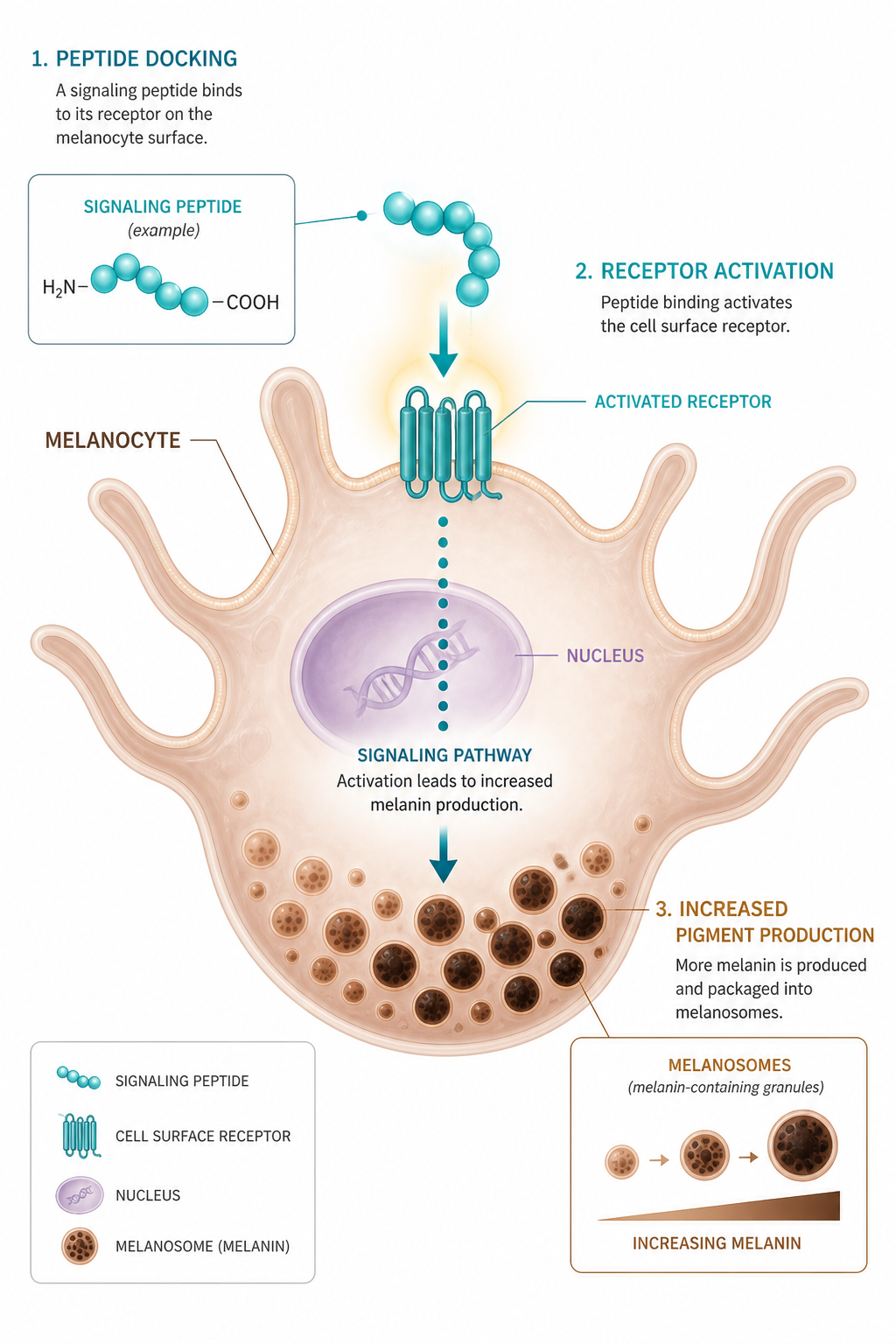
Where to Buy Melanotan 2 in 2026: A Guide to Safe Sourcing and Verifying MT2 Purity
Melanotan 2 carries one of the more specific, peer-reviewed adverse-event records in the research-peptide category, plus a decade of MHRA warnings. Here's what the documented risk actually says before any sourcing decision.