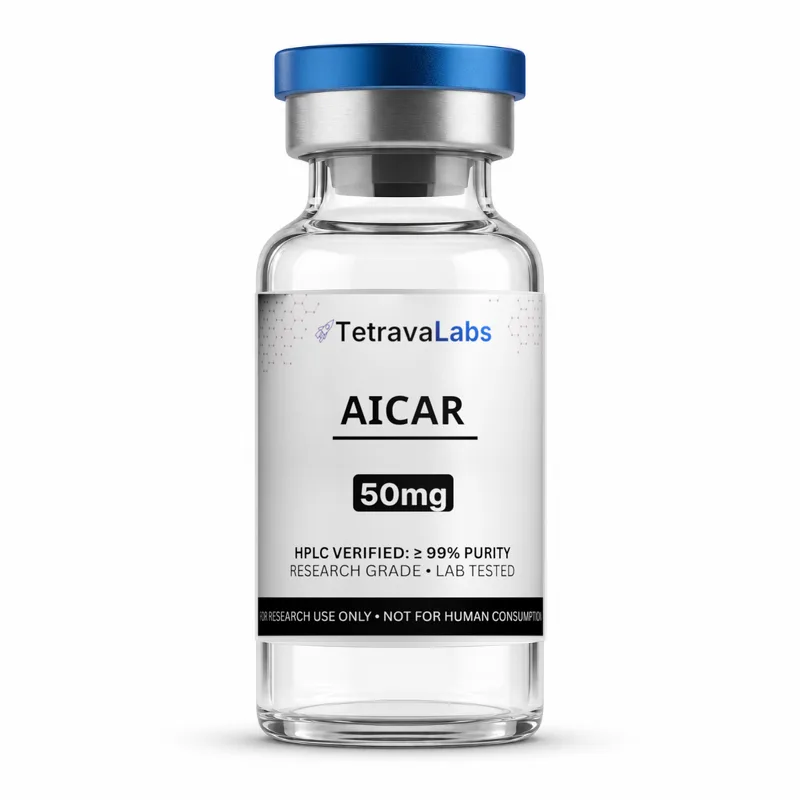
AICAR (50mg)
For Research Use Only. Not for human consumption.
99%+ purity
$55.00 – $440.00
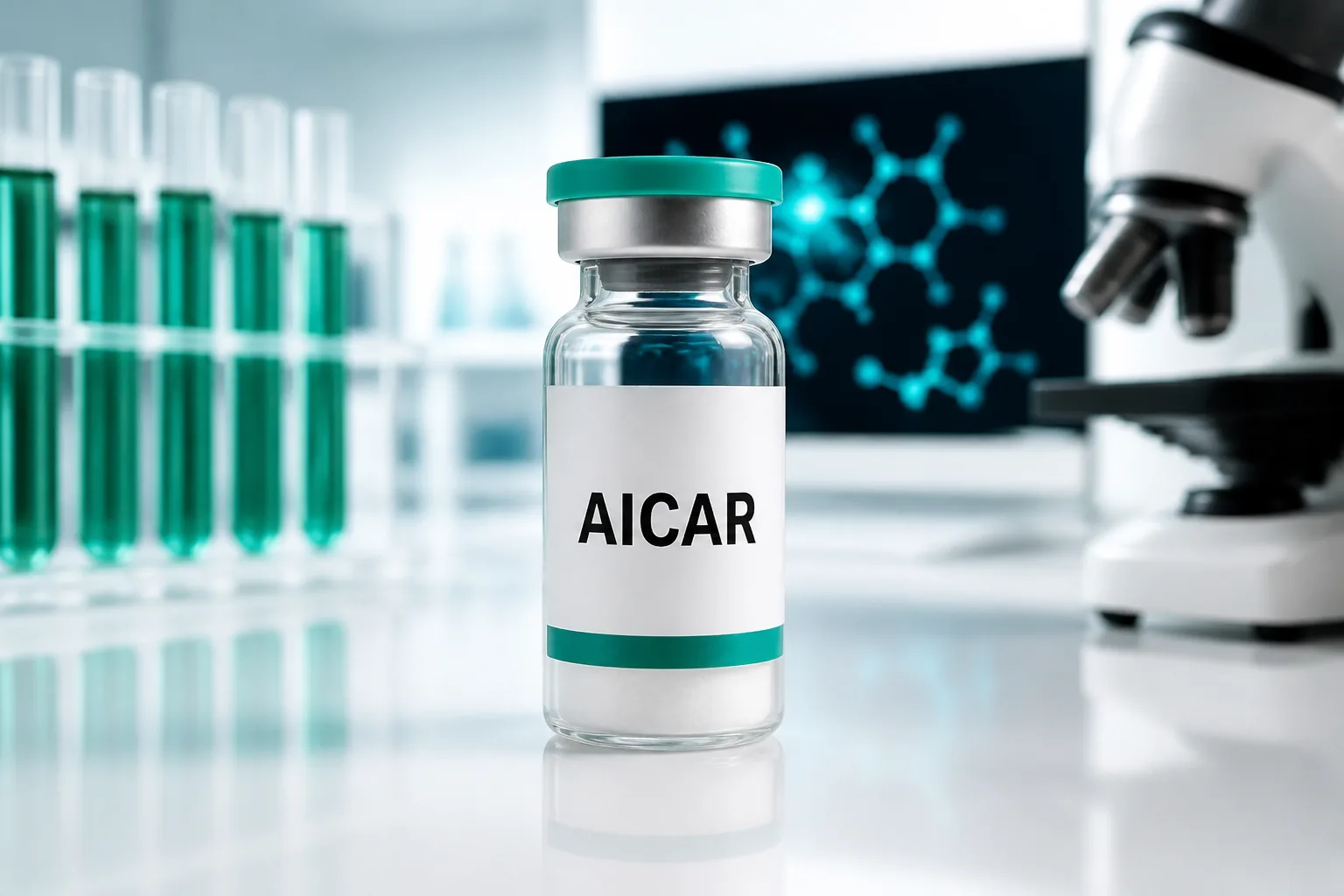
Buy AICAR online from Tetrava Labs. AICAR is an AMPK-pathway activator widely used in metabolic and mitochondrial research to probe cellular energy sensing.
- FREE shipping on all orders
- Guaranteed delivery to your doorstep
- Secure payment with card or crypto
- Enjoy discounts with every purchase
24/7 support — Email or WhatsApp
1 / 5 / 10 vials
$440.00
$550.00
10 vials · $44.00/vial
You save $110
AICAR 50mg Peptide
AICAR peptide is catalog slang for acadesine, 5-aminoimidazole-4-carboxamide ribonucleoside, a nucleoside analogue that cells convert to ZMP, an AMP mimetic that activates AMPK.[1]
Tetrava Labs lists AICAR 50mg with its research peptides as a lyophilized metabolic reagent for AMPK assays. Buy AICAR here when the protocol needs a documented nucleoside AMPK activator, not a peptide chain. Research use only. Not for human or veterinary consumption.
Specifications
These fields are the catalog identity for AICAR 50mg. Match the lot on the vial to the COA library published by Tetrava Labs before an assay. CAS 2627-69-2 is the registry lookup on PubChem.
AICAR 50mg Research
Mechanism
Pathway detail stays with the cited paragraphs in this research block. Do not import a mechanism from a compound that only shares part of the name. Related listings are with the other research peptides.
What the published models measured
Corton, Gillespie, Hawley, and Hardie established AICAR as a practical way to activate AMP-activated protein kinase in intact cells.[1] The nucleoside is taken up and phosphorylated to ZMP. ZMP mimics AMP at AMPK, so the kinase turns on without the cell having to drain ATP first.
That is a pharmacological AMPK switch, useful in glucose-uptake, fatty-acid oxidation, and energy-sensing plates. If the notebook says peptide, the identity section should still say nucleoside analogue.
The Hardie-lab paper is the method reference most AMPK groups still mean when they say they used AICAR.[1] They showed that AICAR raises the AMPK-activating nucleotide in intact cells and turns the kinase on with a defined chemical handle.
Use that paper to set why AICAR is in the well. Do not turn a cell-method concentration into a body protocol. The 1995 work is an intact-cell biochemistry method, not a human study.
AICAR vs MOTS-c shows up in the same metabolic keyword cluster. They are not the same molecule. AICAR is a nucleoside analogue that becomes ZMP and activates AMPK directly.[1] MOTS-c is a 16-amino-acid peptide encoded in mitochondrial DNA.
A lab can run them as parallel metabolic arms. It cannot treat one COA as a substitute for the other. Different structures, different identity tests, different stock solutions.
Where the evidence stops
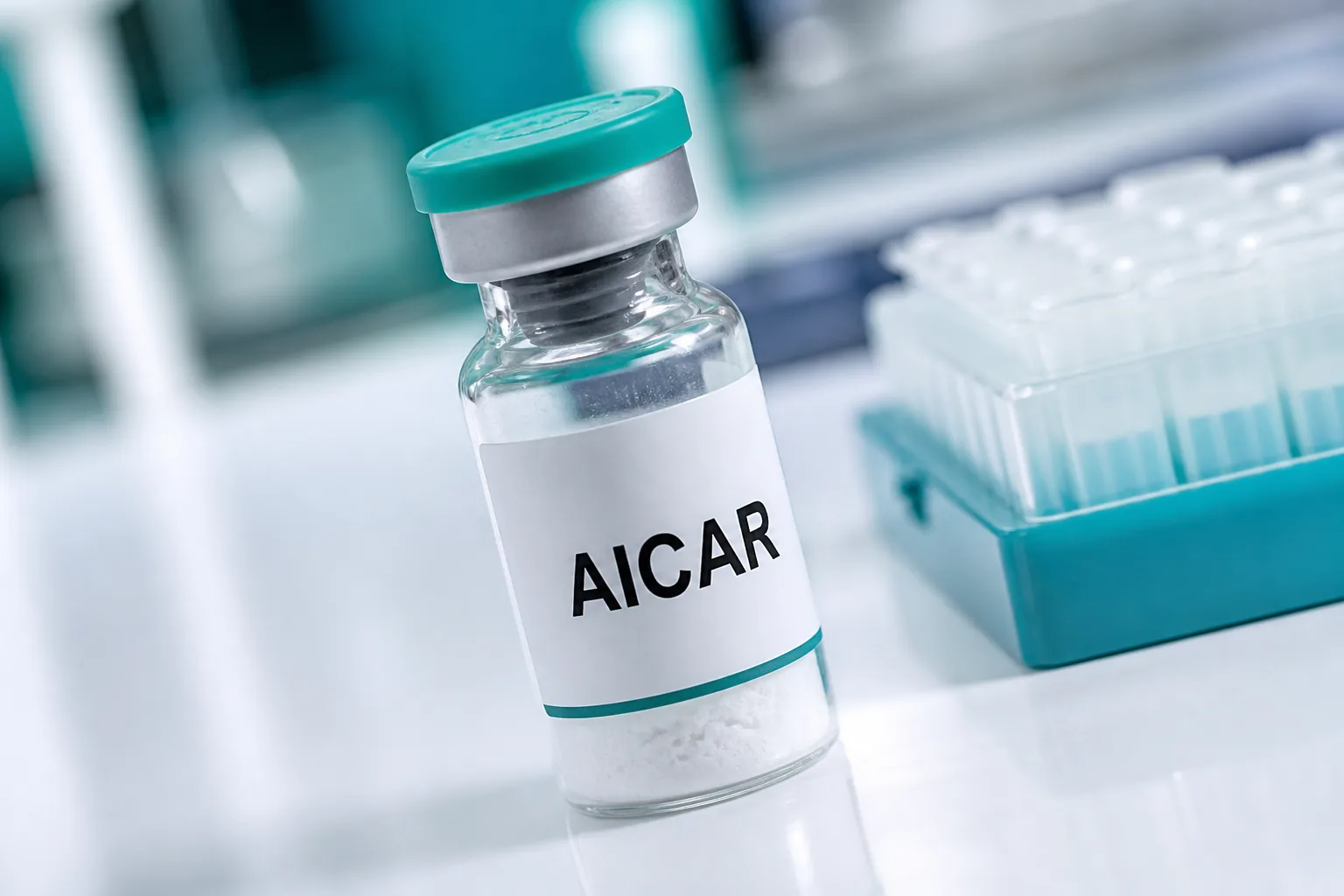
Peptide catalogs sell AICAR because metabolic labs order it next to actual peptides. The molecule is still acadesine. Calling it an AICAR peptide does not give it a residue sequence.
WADA lists AMPK agonists, including AICAR, on the Prohibited List.[2] That is a doping-control classification. It is not evidence that the reagent improves performance, and this page does not treat the listing as a use claim.
Identity and the certificate of analysis
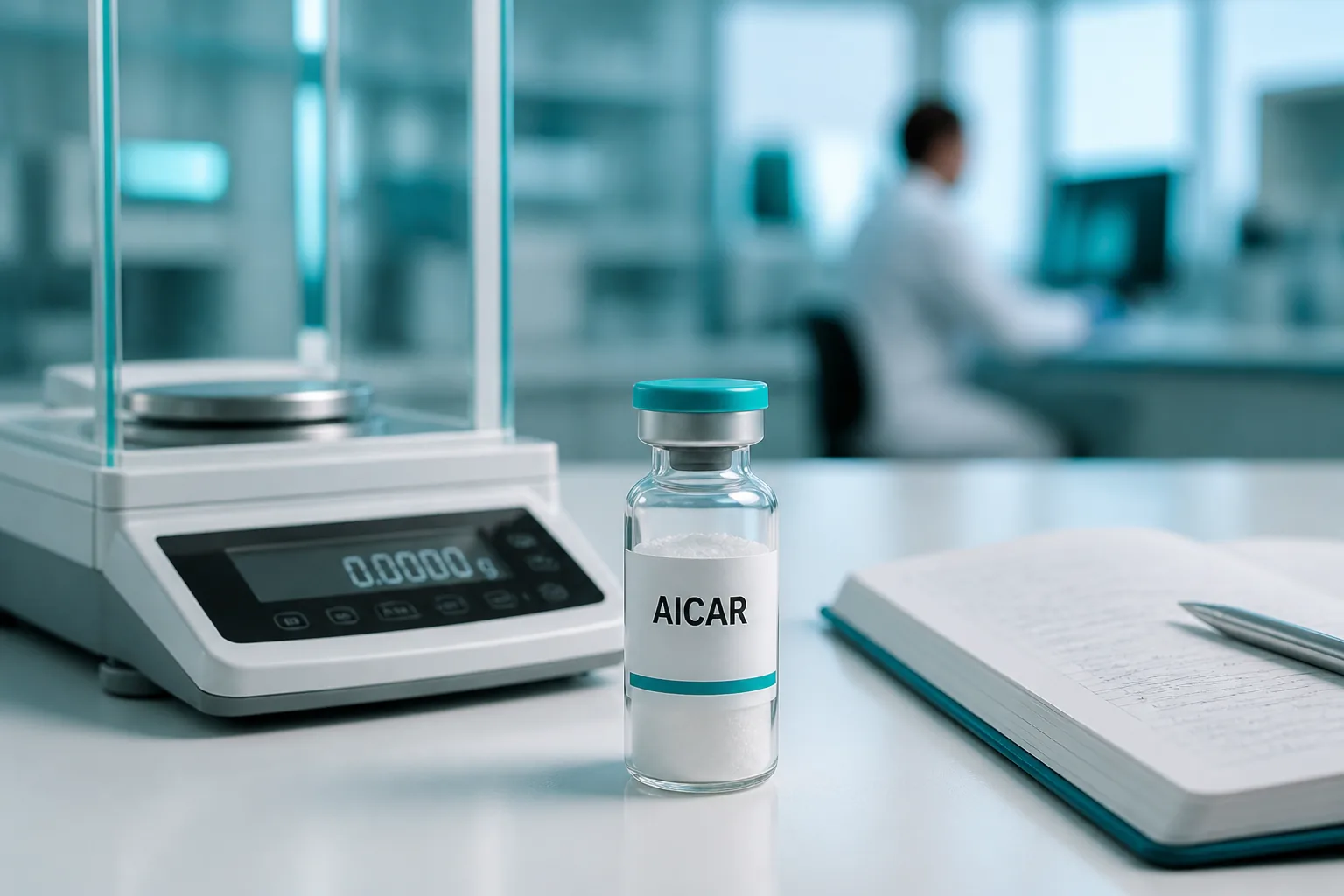
AICAR for sale on this page is the 50 mg research vial. Buy AICAR when the AMPK method needs a lot-linked nucleoside. Lot on the vial matches the Certificate of Analysis. Identity as AICAR / acadesine, not as a peptide sequence.
AICAR 50mg ships lyophilized. Store sealed vials at -20 C. Log diluent lot, concentration, date, and operator against the batch COA.
References
Author Profile

Tetrava Labs Editorial Team
Editorial Team, Tetrava Labs
Content published by Tetrava Labs is compiled and fact-checked using peer-reviewed scientific literature, HPLC-MS Certificates of Analysis (COA), and primary biochemical data. Research use only.
Frequently Asked Questions
Research Use Only Disclaimer
All products are intended for laboratory research purposes only. Not approved for human consumption, diagnostic use, or therapeutic applications. By purchasing, you confirm you are a qualified research professional.