
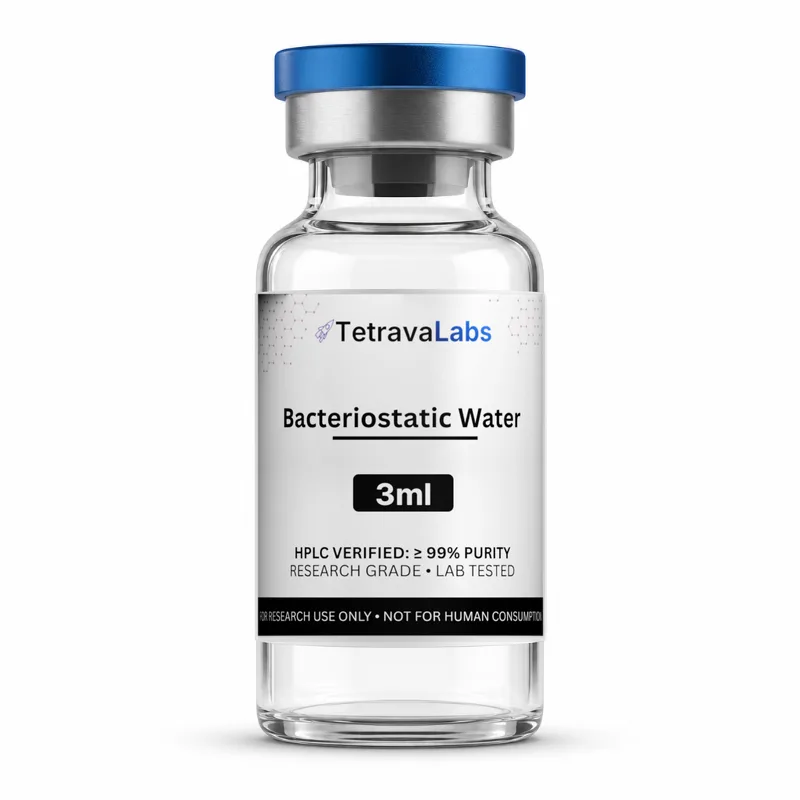
Bacteriostatic Water (3ml)
For Research Use Only. Not for human consumption.
99%+ purity
$7.00 – $57.00
Buy Bacteriostatic Water online from Tetrava Labs. Bacteriostatic water is a sterile diluent with benzyl alcohol preservative, used to reconstitute lyophilized research peptides under lab protocols.
- FREE shipping on all orders
- Guaranteed delivery to your doorstep
- Secure payment with card or crypto
- Enjoy discounts with every purchase
24/7 support — Email or WhatsApp
Select strength
1 / 5 / 10 vials
$57.00
10 vials · $5.70/vial
Bacteriostatic Water
Bacteriostatic water is sterile water carrying a bacteriostatic amount of the preservative benzyl alcohol, typically 0.9% w/v in the formulation literature.[1] It is a laboratory diluent, not a neutral one. The preservative that stops microbial growth can also act on the molecules dissolved in it.
Tetrava Labs lists bacteriostatic water in 3 ml and 10 ml sizes among its lab supplies next to its research peptides. Research Use Only. Not for human or veterinary consumption.
Specifications
These fields are the catalog identity for Bacteriostatic Water. Match the lot on the vial to the COA library published by Tetrava Labs before an assay. CAS 7732-18-5 is the registry lookup on PubChem.
Bacteriostatic Water Research
Mechanism
The preservative is the active part of the story. A mechanistic study of a model protein found that benzyl alcohol binds the protein, a weak hydrophobically driven interaction, and shifts the molecular population toward partially unfolded, aggregation-competent species.[2]
What the published models measured
In lyophilized formulations of a model protein, rhIL-1ra, reconstituting with 0.9% benzyl alcohol caused more aggregation than reconstituting with plain water. The extent depended on how much native structure the dried solid had kept, and sucrose partially protected against it.[1][2]
A different benzyl alcohol hazard is documented in the clinical literature, reported in a 1982 New England Journal of Medicine paper titled The gasping syndrome and benzyl alcohol poisoning.[3] It is a reason the preservative's presence has to be a deliberate decision.
Where the evidence stops
Both aggregation studies used a large protein, not a short peptide, and neither tests this product with any specific compound.[1][2] Do not read them as proof that a peptide will or will not aggregate. Read them as the reason a diluent choice should be backed by a stability comparison in the actual system.
Identity and the certificate of analysis
A catalog error we corrected: the specification once described this liquid reagent as a white lyophilized powder with freezer storage. It is now listed as a clear, colorless liquid at controlled room temperature, and the page labels it as a liquid reagent.
Water is H2O, 18.02 Da, so a mass spectrum identifies nothing. The meaningful quality attributes are sterility documentation and the preservative content stated on the lot's COA library entry. For the preservative on its own, see benzyl alcohol.
References
- Roy S, et al. Effects of benzyl alcohol on aggregation of recombinant human interleukin-1-receptor antagonist in reconstituted lyophilized formulations. J Pharm Sci. 2005.
- Zhang Y, Roy S, et al. Mechanism for benzyl alcohol-induced aggregation of recombinant human interleukin-1 receptor antagonist in aqueous solution. J Pharm Sci. 2004.
- Gershanik J, Boecler B, et al. The gasping syndrome and benzyl alcohol poisoning. N Engl J Med. 1982.
Author Profile

Tetrava Labs Editorial Team
Editorial Team, Tetrava Labs
Content published by Tetrava Labs is compiled and fact-checked using peer-reviewed scientific literature, HPLC-MS Certificates of Analysis (COA), and primary biochemical data. Research use only.
Frequently Asked Questions
Research Use Only Disclaimer
All products are intended for laboratory research purposes only. Not approved for human consumption, diagnostic use, or therapeutic applications. By purchasing, you confirm you are a qualified research professional.
You may also like
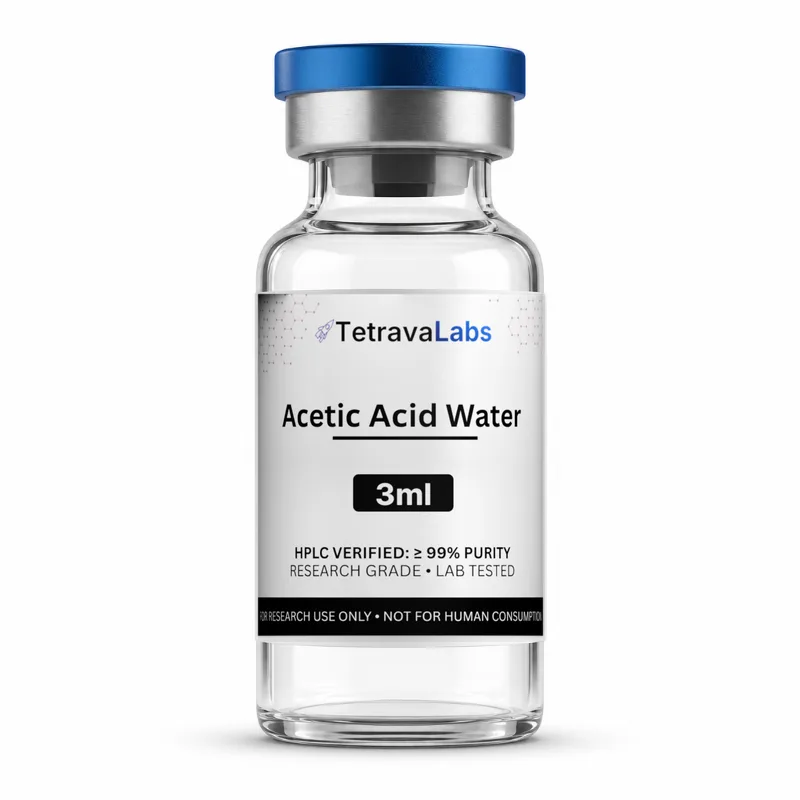
Acetic Acid Water
From$11.00
3ml · 1, 5 or 10 vials
As low as $8.90/vial
For laboratory research use only
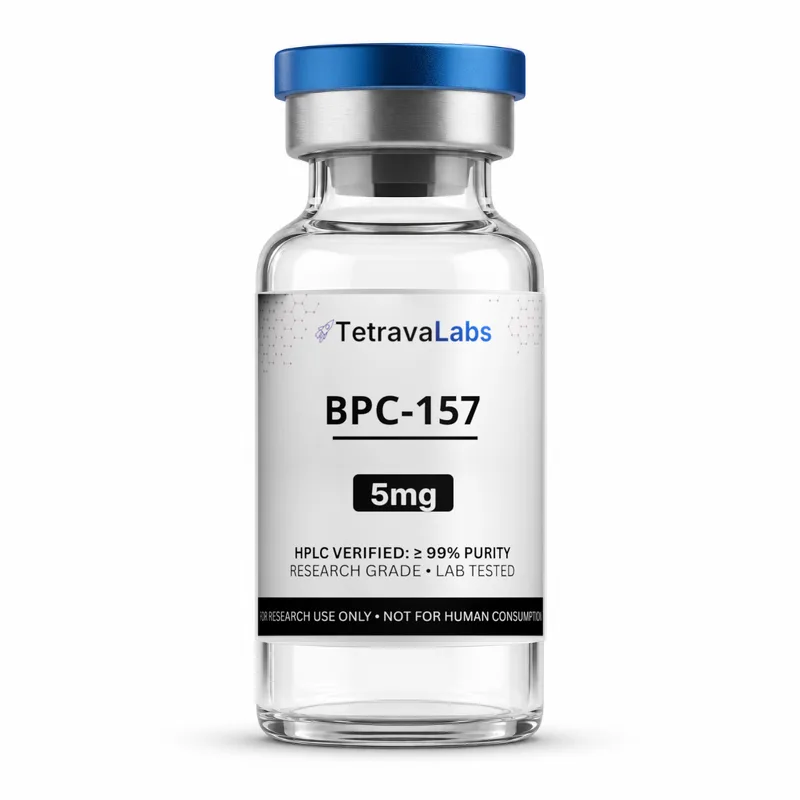
BPC-157
From$49.00
5mg / 10mg · 1, 5 or 10 vials
As low as $39.20/vial
For laboratory research use only
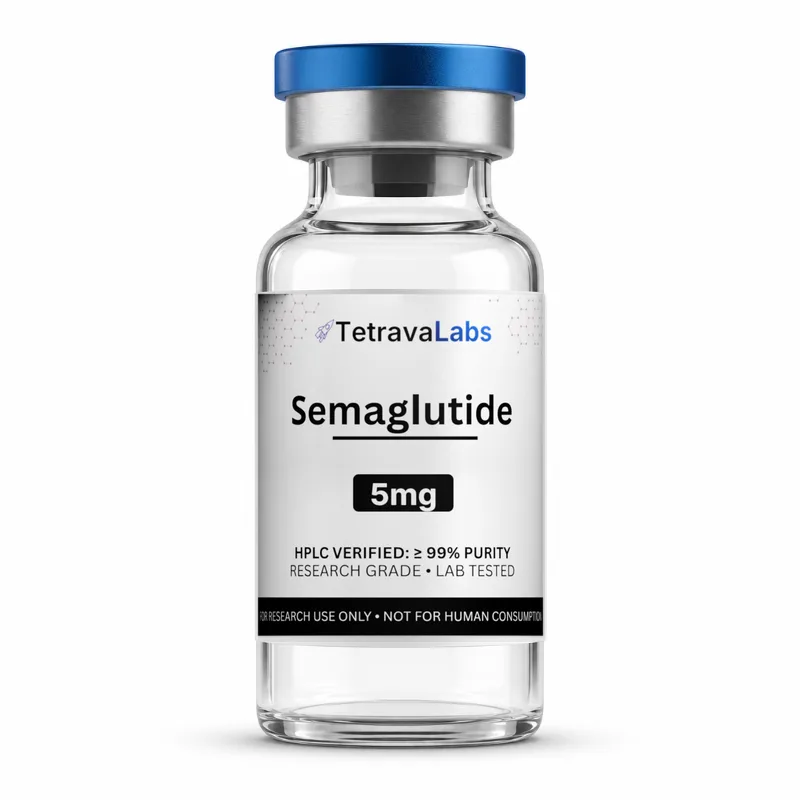
Semaglutide
From$45.00
5mg / 10mg · 1, 5 or 10 vials
As low as $36.00/vial
For laboratory research use only