Lab reviews
Customer reviews
5.0 · 3
Alan Krelin
Aug 6, 2026
Thanks for the seamless process and the insanely efficient support from family and friends.
Pat Piper
Aug 6, 2026
Took a chance and ordered 5 vials of BPC-157 and I'm happy I did. You guys were always prompt with your replies and my order arrived before on time. Glad I found you guys, Tetrava Labs. Will definitely order for here again.
Chris Kim
Aug 3, 2026
Ordered BPC-157 online from Tetrava Labs. Experience was great because I could pay via card and their support is really really efficient.
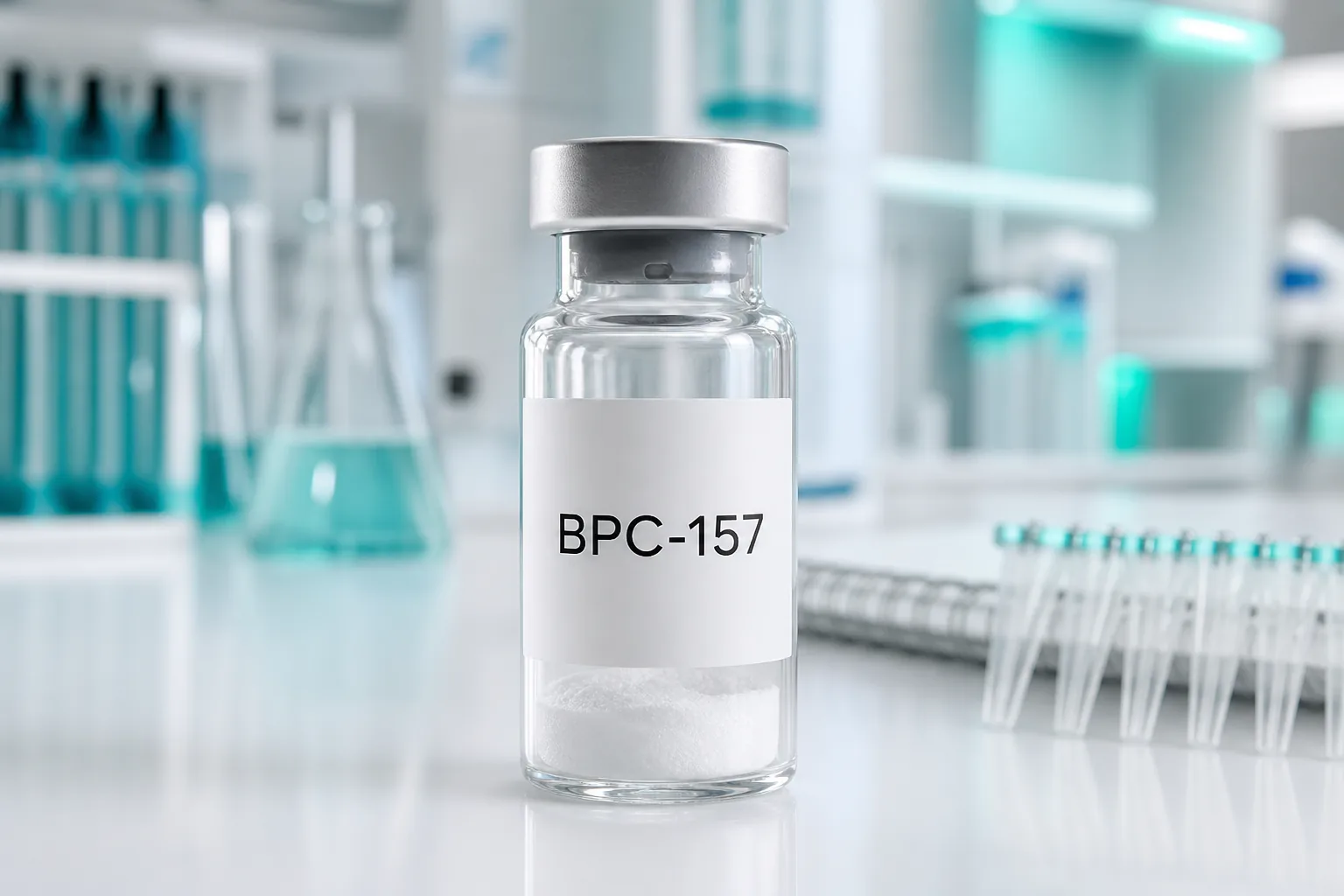
BPC-157
For Research Use Only. Not for human consumption.
99%+ purity
5.0(3 reviews)$39.00 – $290.00
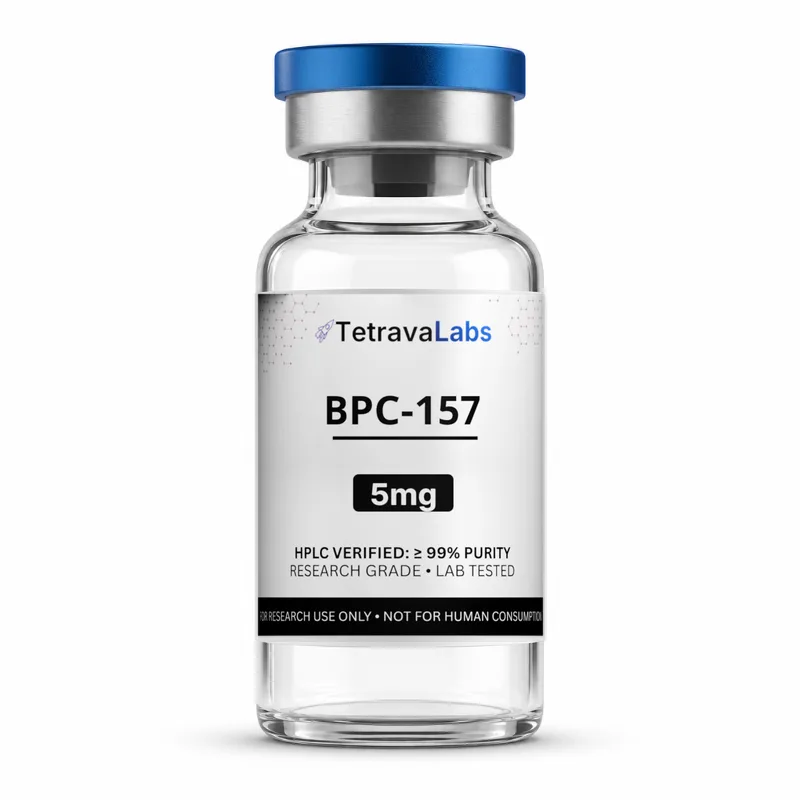
Buy BPC-157 online from Tetrava Labs. BPC-157 is a synthetic gastric pentadecapeptide extensively studied in tissue repair, angiogenesis, and musculoskeletal research models.
- FREE shipping on all orders
- Guaranteed delivery to your doorstep
- Secure payment with card or crypto
- Enjoy discounts with every purchase
24/7 support — Email or WhatsApp
Select strength
1 / 5 / 10 vials
$290.00
$390.00
10 vials · $29.00/vial
You save $100
What is BPC-157?
BPC-157 is short for Body Protection Compound-157. It's a synthetic pentadecapeptide, 15 amino acids, built from a partial and stabilized sequence of a gastroprotective protein first isolated from human gastric juice.[1]
Tetrava Labs supplies BPC-157 as a sterile, lyophilized reagent for laboratory research only. Labs use it to study tissue-repair signaling, angiogenesis, and gastrointestinal mucosal-protection models in cell and animal systems. The molecular formula, weight, and sequence listed below are cross-referenced against the PubChem compound record for BPC-157.[10] Every lot ships with third-party HPLC-verified identity and purity data. This compound is sold strictly for research use. It is not for human or veterinary consumption.
BPC-157 Peptide Research
BPC-157 and the increased expression of VEGFR2
Chick chorioallantoic membrane and endothelial tube-formation assays show that BPC-157 increases vessel density and speeds up blood-flow recovery in the ischemic hindlimb muscle of rats.[2] The same study reported higher expression of vascular endothelial growth factor receptor 2 (VEGFR2), plus time-dependent activation of the VEGFR2-Akt-eNOS signaling cascade. That cascade is tied to nitric-oxide-mediated endothelial function.[2]
Labs modeling angiogenesis in tissue-repair protocols often reference this pathway. It comes up when designing VEGFR2 or nitric-oxide-synthase readouts, and when picking endothelial cell lines for comparative screening.
BPC-157 speeds up fibroblast migration
In cultured rat Achilles tendon fibroblasts, BPC-157 sped up ex vivo tendon-explant outgrowth, increased cell survival under oxidative (H2O2) stress, and increased fibroblast migration in transwell assays in a dose-dependent way.[3] The same study tied that migratory effect to higher phosphorylation of focal adhesion kinase (FAK) and paxillin, two proteins involved in cytoskeletal reorganization and cell adhesion, with no matching change in total protein levels.[3]
Researchers cite this mechanism in comparative tendon-repair study designs alongside growth-factor controls like bFGF or EGF. BPC-157 is also commonly paired with TB-500 in combined tissue-repair protocols, worth knowing when you structure a dose-response migration assay.
BPC-157 increases GHR mRNA and protein
A cDNA microarray screen of BPC-157-treated tendon fibroblasts flagged growth hormone receptor (GHR) as one of the most strongly up-regulated genes.[4] Follow-up assays found dose- and time-dependent increases in GHR mRNA and protein. Adding exogenous growth hormone to BPC-157-treated cultures also activated the Janus kinase 2 (JAK2) pathway downstream, a combination tied to increased fibroblast proliferation.[4]
Researchers studying GHR-JAK2 crosstalk in tendon models may find this pairing useful for designing co-treatment or sequential-exposure protocols.
BPC-157 and quadriceps myotendinous junction recovery
Researchers surgically dissected the quadriceps myotendinous junction in rats, an injury that does not heal on its own. Intraperitoneal and oral BPC-157 regimens were tied to full functional recovery, reversed the progressive muscle atrophy, and resolved the defect structurally by postoperative day 42.[5]
A 2025 systematic review of 36 studies, 35 preclinical and 1 clinical, concluded that BPC-157 modulates growth hormone receptor expression along with angiogenic and inflammatory-cytokine pathways across muscle, tendon, ligament, and bone injury models in animal research.[8] The same review was direct about the gap: the evidence base is still dominated by preclinical, level IV-V study designs.
BPC-157 and gastrointestinal mucosal protection research
BPC-157 was first characterized in work on gastric-juice-derived cytoprotective compounds. Most of the foundational literature centers on gastrointestinal ulcer, fistula, and mucosal-injury models in rats.[1] Review papers describe consistent protective findings across these GI-injury models, tied in part to modulation of the nitric-oxide system and interaction with several neurotransmitter pathways. The exact upstream mechanism still isn't fully worked out.[1]

BPC-157 oral vs injection
Most synthetic peptides longer than 8 to 10 amino acids lose most of their bioactivity when given orally. Gastric acid and digestive proteases break down the peptide backbone before much of it survives into systemic circulation. BPC-157 is a documented exception. Because the sequence is a stabilized fragment of a native human gastric-juice protein, review literature reports it stays structurally intact in human gastric juice for more than 24 hours in vitro.[1][12] That stability is unusual among peptide research compounds, and it's the mechanistic reason researchers study BPC-157 through oral gavage or drinking-water protocols alongside injectable routes.
Direct within-study comparisons of the two routes are rare. One 2008 rat colocutaneous-fistula study is a useful reference point: researchers dosed BPC-157 either continuously in drinking water or once daily by intraperitoneal injection, at matched doses of 10 micrograms per kilogram or 10 nanograms per kilogram, then assessed fistula closure macroscopically, microscopically, biomechanically, and functionally over a 28-day follow-up.[11] Both routes healed the colonic and skin defects to a comparable degree. A separate rat model of the surgically dissected quadriceps myotendinous junction found the same pattern for a systemic musculoskeletal endpoint: intraperitoneal and oral regimens were both tied to full functional recovery.[5] Neither study measured comparative bioavailability, though, and no controlled human pharmacokinetic study has quantified how much intact peptide reaches systemic circulation after an oral dose. Comparable outcomes in these specific rodent protocols shouldn't be read as interchangeable across every endpoint, species, or dose.
In practical terms, oral or intragastric dosing fits BPC-157's original GI-tract research context best, since it reaches the luminal mucosa directly and avoids the injection-site trauma that can confound skin- or gut-healing designs. Injection (IP, SC, or IM) stays the default choice in the receptor- and growth-factor-signaling studies cited above, because it bypasses the GI tract entirely and delivers a known, individually controlled dose. That oral stability is compound-specific, too: it hasn't been documented for TB-500, which Tetrava also supplies for combined tissue-repair protocols. Route choice should follow the protocol, not the other way around. Tetrava Labs supplies BPC-157 as both a lyophilized vial for injectable research solutions and as BPC-157 capsules for oral-route protocols.
BPC-157 vs TB-500
Researchers often mention BPC-157 and TB-500 in the same breath, but they aren't the same kind of research subject. BPC-157 is one defined 15-amino-acid sequence with a molecular weight near 1,419 daltons. Material sold as TB-500 is different: mass-spectrometry analysis identified it as the N-terminal acetylated 17-23 fragment of thymosin beta-4 (Ac-LKKTETQ), weighing about 888 daltons, not the full 4,963-dalton protein the name implies.[13]
That distinction matters for anyone designing a comparative protocol. Data collected under the label thymosin beta-4 in older literature usually refers to the full-length protein, not the short fragment identified in TB-500 vials, so the two datasets shouldn't be treated as interchangeable.[13] Both compounds also carry the same regulatory status: the FDA placed BPC-157 and the thymosin beta-4 fragment on its Category 2 significant-safety-risk bulk drug substance list in 2023, and both remain Research Use Only.[14] Tetrava Labs supplies BPC-157 and TB-500 as separate research reagents, each with its own lot-specific COA. For a longer side-by-side, see BPC-157 vs TB-500.
Central nervous system and traumatic brain injury models
One published study evaluated intraperitoneal BPC-157 in a mouse falling-weight traumatic brain injury (TBI) model.[6] Treated mice had lower 24-hour post-injury mortality and less severe hemorrhage and edema on gross and histological assessment. Outcomes improved further when the peptide was given prophylactically, before the injury.[6] That's still the only direct TBI dataset in the literature. Extrapolating beyond this single study, in a single species, calls for caution.
BPC-157 as it stands: preclinical weight vs human data
A common misconception treats the large rodent and cell-culture literature on BPC-157 as proof of human efficacy. Current systematic and narrative reviews say plainly that it isn't:
- BPC-157 has no FDA approval, or approval from any comparable regulator, for human therapeutic use. Major anti-doping authorities prohibit it in professional sports.[8]
- Human data are limited to a small number of pilot-level, non-blinded studies. One retrospective case series looked at intra-articular injection for chronic knee pain: 14 of 16 patients reported relief beyond six months.[7]
- A 2025 systematic review found only one clinical-level study among 36 papers total, and no published in-human safety data, despite favorable preclinical toxicology.[8]
- A 2025 narrative review reached the same conclusion. It called BPC-157 investigational and asked for well-designed human trials before drawing clinical conclusions from animal data.[9]

Laboratory handling: reconstitution, storage, and documentation
Tetrava Labs ships BPC-157 as a lyophilized powder, which keeps it stable during transport. Store sealed vials at -20°C, skip repeated freeze-thaw cycles, and reconstitute under sterile technique with a protocol-appropriate diluent right before use. For more on how this compound compares to a related peptide, see BPC-157 vs TB-500.
Once reconstituted, store working solutions at 4°C and use them within the window your laboratory SOP defines. Record the diluent lot, reconstitution date, and operator in your ELN, so preparation conditions stay auditable alongside the batch Certificate of Analysis.
References & Citations
- Sikiric P, Seiwerth S, Rucman R, et al. Stable gastric pentadecapeptide BPC 157: novel therapy in gastrointestinal tract. Curr Pharm Des. 2011;17(16):1612-1632.
- Hsieh MJ, Liu HT, Wang CN, et al. Therapeutic potential of pro-angiogenic BPC157 is associated with VEGFR2 activation and up-regulation. J Mol Med (Berl). 2017;95(3):323-333.
- Chang CH, Tsai WC, Lin MS, Hsu YH, Pang JH. The promoting effect of pentadecapeptide BPC 157 on tendon healing involves tendon outgrowth, cell survival, and cell migration. J Appl Physiol. 2011;110(3):774-780.
- Chang CH, Tsai WC, Hsu YH, Pang JH. Pentadecapeptide BPC 157 enhances the growth hormone receptor expression in tendon fibroblasts. Molecules. 2014;19(11):19066-19077.
- Japjec M, Horvat Pavlov K, Petrovic A, et al. Stable gastric pentadecapeptide BPC 157 as a therapy for the disable myotendinous junctions in rats. Biomedicines. 2021;9(11):1547.
- Tudor M, Jandric I, Marovic A, et al. Traumatic brain injury in mice and pentadecapeptide BPC 157 effect. Regul Pept. 2010;160(1-3):26-32.
- Lee E, Padgett B. Intra-articular injection of BPC 157 for multiple types of knee pain. Altern Ther Health Med. 2021;27(4):8-13.
- Vasireddi N, Hahamyan H, Salata MJ, et al. Emerging use of BPC-157 in orthopaedic sports medicine: a systematic review. HSS J. 2025;21(4):485-495.
- McGuire FP, Martinez R, Lenz A, et al. Regeneration or risk? A narrative review of BPC-157 for musculoskeletal healing. Curr Rev Musculoskelet Med. 2025;18:611-619.
- National Center for Biotechnology Information. PubChem Compound Summary for CID 9941957, BPC-157.
- Klicek R, Sever M, Radic B, et al. Pentadecapeptide BPC 157, in clinical trials as a therapy for inflammatory bowel disease (PL14736), is effective in the healing of colocutaneous fistulas in rats: role of the nitric oxide-system. J Pharmacol Sci. 2008;108(1):7-17.
- Seiwerth S, Milavic M, Vukojevic J, et al. Stable gastric pentadecapeptide BPC 157 and wound healing. Front Pharmacol. 2021;12:627533.
- Esposito S, Deventer K, Goeman J, Van der Eycken J, Van Eenoo P. Synthesis and characterization of the N-terminal acetylated 17-23 fragment of thymosin beta 4 identified in TB-500, a product suspected to possess doping potential. Drug Test Anal. 2012;4(9):733-738.
- U.S. Food and Drug Administration. Certain Bulk Drug Substances for Use in Compounding That May Present Significant Safety Risks. 2023.
Author Profile

Tetrava Labs Editorial Team
Editorial Team, Tetrava Labs
Content published by Tetrava Labs is compiled and fact-checked using peer-reviewed scientific literature, HPLC-MS Certificates of Analysis (COA), and primary biochemical data. Research use only.
Frequently Asked Questions
Research Use Only Disclaimer
All products are intended for laboratory research purposes only. Not approved for human consumption, diagnostic use, or therapeutic applications. By purchasing, you confirm you are a qualified research professional.