
BPC-157 vs TB-500: The Hidden Truth About What's in the Vial
Tetrava Labs Editorial Team7 min read
Comparing BPC-157 vs. TB-500? Uncover the clinical evidence—and the hidden chemical truth behind TB-500's borrowed research.

"BPC-157 vs TB-500" gets framed as a matchup between two healing peptides. That framing skips the real question: how much of what people say about either one comes from a study you could hand to a doctor? Not much. Neither peptide is FDA-approved. Both sit on the 2026 World Anti-Doping Agency (WADA) Prohibited List at all times, with no exception for reason or dose. Beyond that shared regulatory status, the two compounds split in a way most comparisons skip entirely: TB-500 sold on the research-chemical market has been chemically identified as a short fragment of a different, better-studied protein, not as the protein itself. That distinction changes what evidence you're allowed to borrow.
Quick comparison
BPC-157 is a synthetic pentadecapeptide, 15 amino acids, modeled on a fragment of a human gastric protein. TB-500 is marketed as thymosin beta-4, but analytical testing identified it as the acetylated 17-23 fragment (Ac-LKKTETQ) of that protein instead. Weight tells the same story: BPC-157 runs about 1,419 daltons. The TB-500 fragment comes in at roughly 888 daltons, next to about 4,963 daltons for full-length thymosin beta-4. On evidence, BPC-157 has a deep pool of animal and cell data on tendon and muscle angiogenesis. TB-500's human trials, meanwhile, were run almost entirely on full-length recombinant thymosin beta-4, not the fragment actually sold under that name. Human exposure numbers are thin on both sides: fewer than 30 subjects across uncontrolled BPC-157 pilot work, according to a 2026 pharmaceutical development review, against Phase I safety data in 54 healthy volunteers for full-length thymosin beta-4. Regulators treat them alike. The FDA added both BPC-157 and the thymosin beta-4 fragment LKKTETQ to its Category 2 significant safety risk list in September 2023. WADA bans both at all times in 2026: BPC-157 under S0, Non-Approved Substances; TB-500 under S2, Growth Factors, as a thymosin beta-4 derivative.
BPC-157 vs TB-500: what are you actually comparing?
Here's the part most articles miss. A head-to-head between BPC-157 and TB-500 isn't a clean two-molecule comparison. BPC-157 is one defined sequence. TB-500 is a product name, not a settled structure.
Mass-spectrometry work published in Drug Testing and Analysis analyzed vials sold as TB-500 and found a molecule weighing 888.49 daltons: the N-terminal acetylated 17-23 fragment of thymosin beta-4, written as Ac-LKKTETQ. That's not the intact protein, which runs 43 amino acids and about 4,963 daltons. The gap matters because most of the credible human research on thymosin beta-4, including a Phase I dose-escalation trial in 54 healthy volunteers, a European randomized trial in venous leg ulcers, and ongoing cardiac trials for heart attack recovery, used the full-length recombinant protein. None of it used the seven-residue fragment. So when a vendor or forum post cites a thymosin beta-4 heart or wound-healing study to back up TB-500, they're borrowing evidence from one molecule and applying it to a smaller, different one that was never tested that way. Independent lab checks of research-market vials are still limited, so nobody can even confirm that every vial labeled TB-500 contains a consistent fragment at a consistent purity. This one point of confusion probably drives more overstated claims about TB-500 than anything else, because it lets sellers borrow decades of a different molecule's clinical history for free.
What the BPC-157 evidence actually shows
BPC-157's animal and cell-culture data are genuinely deep. Studies link it to VEGF-driven angiogenesis in healing tendon and muscle tissue, and to higher growth hormone receptor expression in Achilles tendon fibroblasts, a mechanism researchers proposed as one driver of the tendon-repair effects seen in rodents.
A 2026 orthopaedic sports medicine systematic review counted 36 total studies through mid-2024. Thirty-five were preclinical. One was clinical. That one clinical study was a retrospective case series: 7 of 12 patients with chronic knee pain reported relief lasting more than six months after an intra-articular injection. No control group. No standardized product. A separately registered human safety trial, NCT02637284, was never published, and reporting cited in an independent evidence review says its data were pulled before outside review could happen.
As of 2026, one placebo-controlled Phase 2 trial, BPC-HAMSTR (NCT07437547), is actively recruiting to test BPC-157 for acute hamstring strains. It's worth watching, because it would be the first controlled human efficacy data for a musculoskeletal indication. Until it reads out, every claim about BPC-157 speeding tendon or ligament recovery in people rests on rodent extrapolation, not confirmed human outcomes.
What the TB-500/thymosin beta-4 evidence actually shows
Set the fragment-versus-protein issue aside for a second and look at what's actually been tested.
Full-length recombinant thymosin beta-4 has a real, if narrow, human safety record. A randomized Phase I study gave single and multiple intravenous doses to 54 healthy volunteers and reported only mild-to-moderate adverse events, with no dose-limiting toxicities. Topical thymosin beta-4 has also been studied in a compassionate-use case series for chronic corneal defects, nine patients, and in a randomized European trial for venous leg ulcers. On the cardiac side, a completed Phase IIa trial (NCT05485818) and an upcoming Phase IIc trial (NCT07586865) are evaluating intravenous recombinant thymosin beta-4 after heart attacks, using cardiac MRI to measure infarct size.
None of these trials used the LKKTETQ fragment identified in TB-500 vials. None targeted the tendon, ligament, or soft-tissue injuries that TB-500 is typically marketed for in fitness and recovery circles. The mechanistic case for the fragment rests on in-vitro cell-migration assays showing LKKTETQ can copy some of the parent protein's actin-regulating activity. That's a real finding. It's also one step removed from a clinical outcome in an actual person.
An evidence-portability check before you trust any claim
Before accepting a claim about either peptide, run it through four questions. Was this shown in a dish, an animal, or a person? If it was an animal, has anyone confirmed the same result in humans? If the human study used a different formulation, full protein versus fragment, or pharmaceutical-grade compound versus an online vial, does the finding actually carry over? And has the specific product been independently checked to contain what the label says?
Most enthusiastic claims about BPC-157 and TB-500 fail at least one of those checks. Usually it's the animal-to-human step for BPC-157, or the full-protein-to-fragment step for TB-500. Running a claim through this list takes under a minute, and it filters out most of the marketing language built on borrowed evidence.
Safety and regulatory reality
The FDA placed both BPC-157 and the thymosin beta-4 fragment LKKTETQ into Category 2 of its 503A bulk drug substance list in September 2023. Compounding pharmacies can't use either as an active ingredient as a result. The agency's stated reasoning: immunogenicity risk for certain routes of administration, unresolved peptide-impurity characterization, and not enough safety data to rule out harm. That last point matters. It's not a finding that the substances are dangerous. It's an admission that nobody has the data to say they aren't.
Both substances are also banned at all times under WADA's 2026 Prohibited List. Any athlete subject to testing risks a sanction regardless of why they used it, including cosmetic reasons or off-label recovery.
The bottom line
BPC-157 has a large, consistent animal literature and almost no controlled human data. TB-500 inherits a stronger human safety record only by association with a different, larger molecule that most vials probably don't contain. Neither one has been shown, in a controlled human trial, to do what it's commonly sold for.
If you're recovering from a soft-tissue injury, the option with the most actual evidence behind it is still the boring one: physical therapy, graded loading, and, where you qualify, enrollment in one of the ongoing registered trials rather than an unregulated vial from a research-chemical seller.
Sourcing for laboratory research
For in vitro or in animal models, compare BPC-157 and TB-500 lot documentation published by Tetrava Labs in the COA Library. Related repair peptides are listed in the tissue repair category.
Frequently Asked Questions (FAQ)
Is TB-500 the same as thymosin beta-4? No. Analytical testing identified TB-500 as a seven-amino-acid acetylated fragment of the 43-amino-acid thymosin beta-4 protein. Labeling in the research-chemical market is inconsistent, so purity and identity aren't guaranteed from vial to vial.
Are BPC-157 and TB-500 legal to buy? They're sold as research chemicals. The FDA has said there's no legal basis for compounding pharmacies to use either in a prescription product, and both are banned in tested sports.
Is there any ongoing human research? Yes. A Phase 2 trial of BPC-157 for hamstring strains and Phase II cardiac trials of full-length recombinant thymosin beta-4 are both active right now, and either one could meaningfully change this picture.
What does it mean that both are on WADA's Prohibited List "at all times"? It means the ban applies in and out of competition, with no minimum dose and no therapeutic-use exception for either substance. A tested athlete can be sanctioned for using either one for recovery, even outside a competition window.
References
- (2023). Certain Bulk Drug Substances for Use in Compounding That May Present Significant Safety Risks. FDA
- (2026). 2026 Prohibited List. World Anti-Doping Agency
- (2024). BPC-157: Experimental Peptide Creates Risk for Athletes. USADA
- Esposito S et al. (2012). Synthesis and characterization of the N-terminal acetylated 17-23 fragment of thymosin beta 4 identified in TB-500. Drug Testing and Analysis
- (2026). Emerging Use of BPC-157 in Orthopaedic Sports Medicine: A Systematic Review. PubMed
- (2021). A first-in-human, randomized, double-blind study of recombinant human thymosin beta 4 in healthy volunteers. PubMed
- (2026). BPC 157 for Acute Hamstring Muscle Strain Repair (NCT07437547). ClinicalTrials.gov

Editorial Team, Tetrava Labs
Content published by Tetrava Labs is compiled and fact-checked using peer-reviewed scientific literature, HPLC-MS Certificates of Analysis (COA), and primary biochemical data. Research use only.
·
Research Use Only Disclaimer
All products are intended for laboratory research purposes only. Not approved for human consumption, diagnostic use, or therapeutic applications. By purchasing, you confirm you are a qualified research professional.
Related articles
Retatrutide Benefits Beyond Weight Loss: What the 2026 Trial Data Actually Show
Retatrutide's liver, knee, kidney, and lipid results — fact-checked against primary trial sources and sorted by evidence tier, from published data to still-preclinical claims.
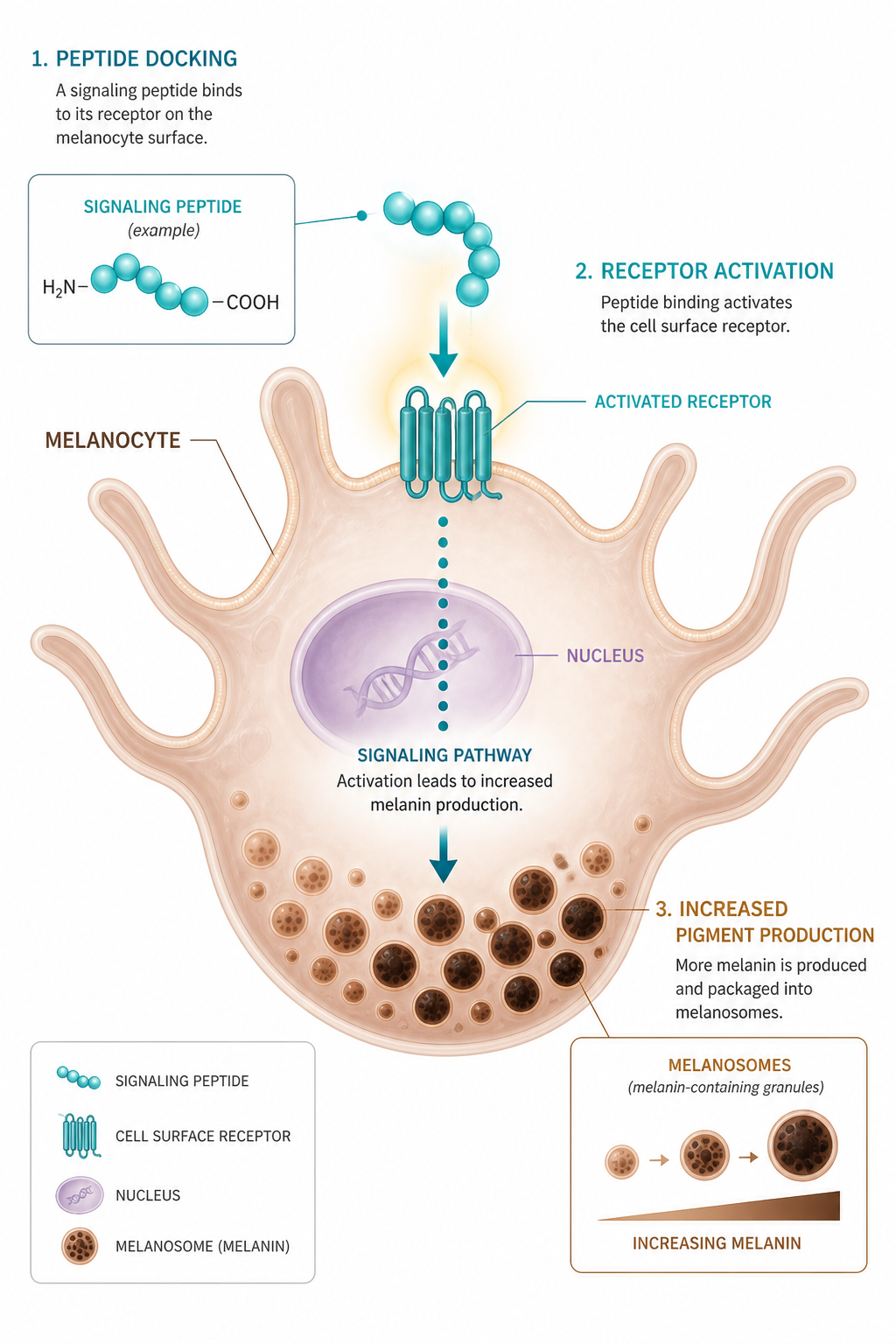
Where to Buy Melanotan 2 in 2026: A Guide to Safe Sourcing and Verifying MT2 Purity
Melanotan 2 carries one of the more specific, peer-reviewed adverse-event records in the research-peptide category, plus a decade of MHRA warnings. Here's what the documented risk actually says before any sourcing decision.
Where to Buy GHK-Cu in 2026: A Guide to Top-Tier Copper Peptides for Anti-Aging and Skin Repair
GHK-Cu is one of the only research peptides with a parallel life as a mainstream cosmetic ingredient. Here's how its dual identity changes what a legitimate research-grade source actually needs to document.