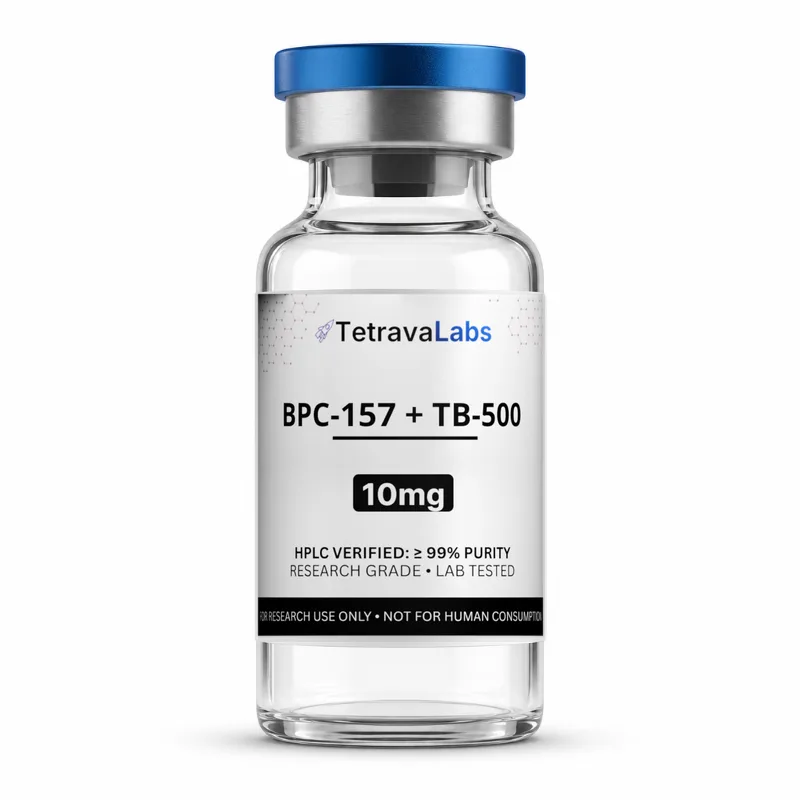
Wolverine Stack (10mg)
BPC-157 + TB-500
For Research Use Only. Not for human consumption.
99%+ purity
$50.00 – $410.00
Buy the Wolverine Stack Peptide online at Tetrava Labs. The BPC-157 + TB-500 Wolverine blend combines widely studied tissue-repair research peptides in a single vial for synergistic cellular recovery, collagen synthesis, and systemic tissue regeneration research.
- FREE shipping on all orders
- Guaranteed delivery to your doorstep
- Secure payment with card or crypto
- Enjoy discounts with every purchase
24/7 support — Email or WhatsApp
Select strength
1 / 5 / 10 vials
$410.00
$500.00
10 vials · $41.00/vial
You save $90
What is Wolverine Stack?
The BPC-157 and TB-500 blend is two research peptides in one vial: the gastric pentadecapeptide BPC-157 and the N-acetylated 17-23 fragment sold as TB-500.[1][2] Forum copy calls that pairing a Wolverine peptide stack. The name is branding. It does not create a third chain.
Tetrava Labs lists the blend with its other research peptides as a Research Use Only reagent. Labs asking where to buy BPC-157 and TB-500 as one documented lot can start here. Lyophilized blend, not a capsule SKU. Not for human or veterinary consumption.
Wolverine Stack Peptide Research
How BPC-157 and TB-500 are studied as separate molecules
BPC-157 is a synthetic 15-residue peptide drawn from a gastroprotective protein first worked up at the University of Zagreb. Preclinical reviews place it in gastrointestinal mucosal-protection models and in tissue-repair and angiogenesis readouts in animals.[1] That is BPC-157's literature.
TB-500, as sold, is a fragment. Anti-doping chemists synthesized the N-terminal acetylated 17-23 stretch of thymosin beta-4 and matched it to material labeled TB-500.[2] Full-length thymosin beta-4 is a 43-residue actin-sequestering protein with its own wound-repair and cardioprotection reviews.[3] A lab that treats the fragment as interchangeable with Tβ4 is reading the wrong molecule.
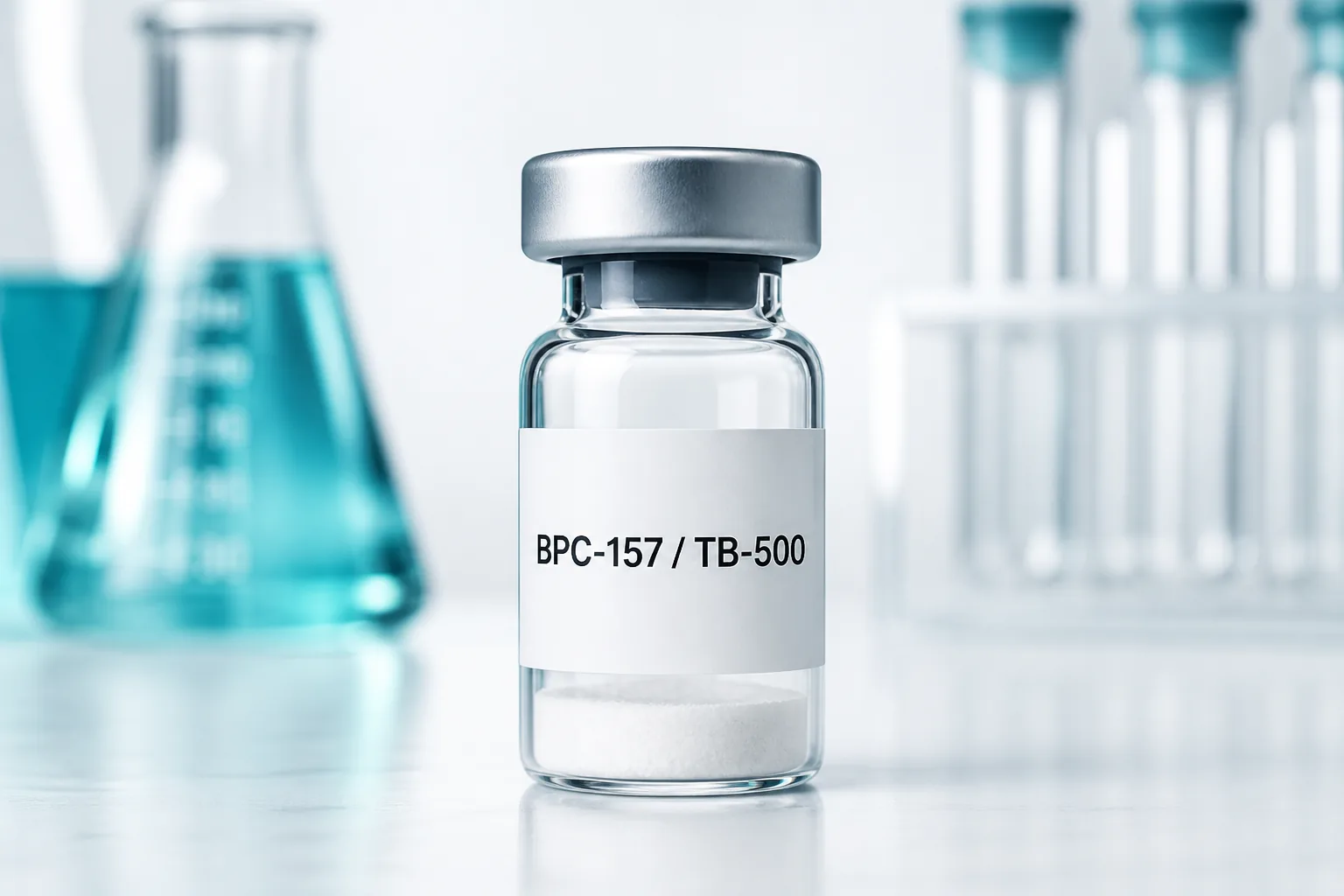
A Wolverine blend is two sequences
The vial holds BPC-157 and the TB-500 fragment. Two identities. Two chromatogram peaks. Marketing language does not fuse them into a third peptide.
BPC-157 TB-500 capsules are a different format. Oral vs injection searches mix folklore with product form. Tetrava does not publish a human route for this SKU. TB-500 in the blend is still the fragment from the 2012 characterization paper, not full thymosin beta-4.[2][3]
The 2012 paper that identified what TB-500 actually is
Esposito and colleagues at the Ghent doping-control lab treated TB-500 as an analytical unknown. They synthesized the N-terminal acetylated 17-23 fragment of thymosin beta-4, then used liquid chromatography-mass spectrometry to show that the fragment accounted for the material sold under that trade name.[2]
The design is a characterization study, not a tissue-repair trial. For a blend COA, that still matters. The TB-500 peak has to match the fragment, not a 43-residue Tβ4 standard pulled from an older review.[2][3]
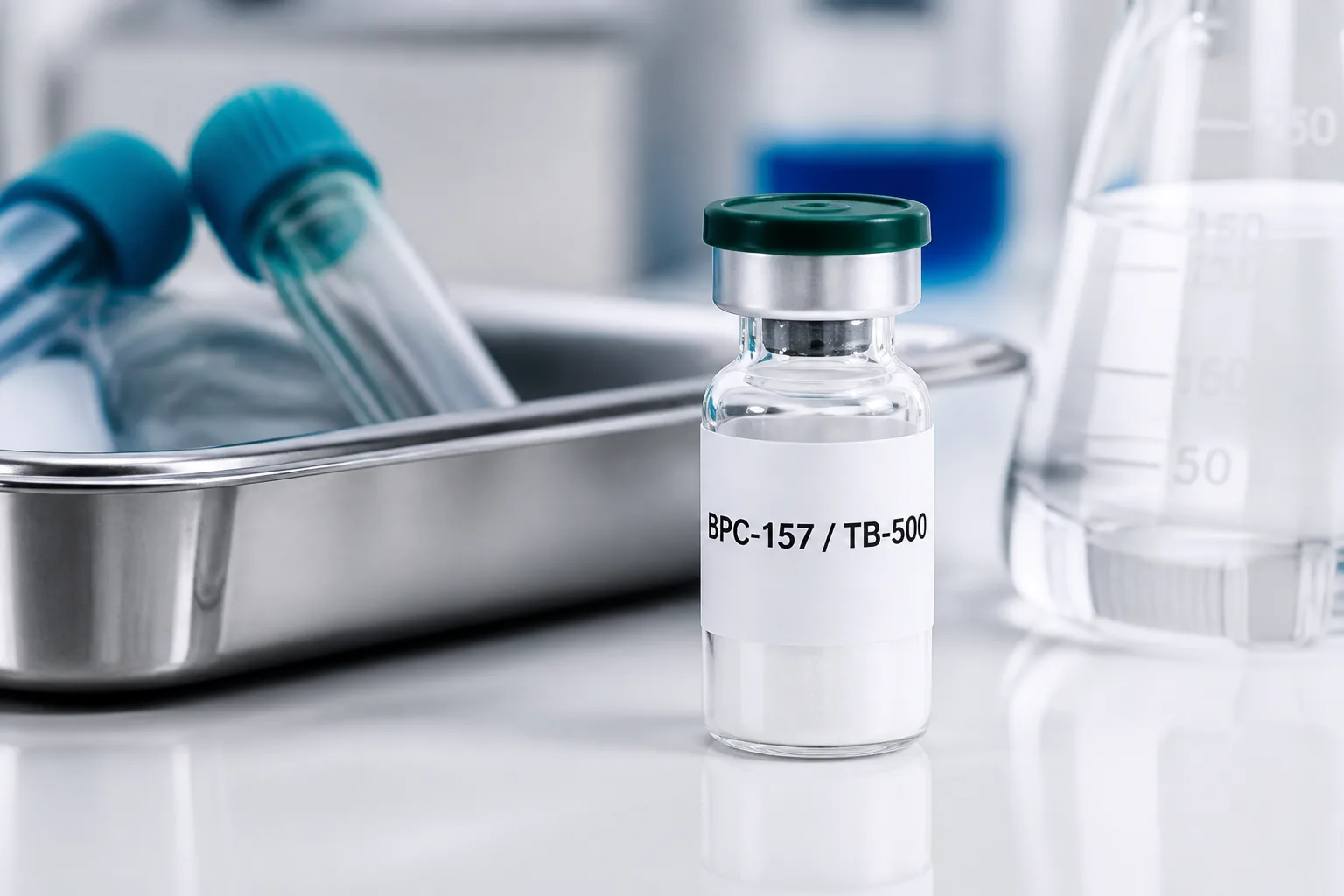
TB-500 vs BPC-157: same vial, different papers
TB-500 vs BPC-157 is a literature split, not a ranking. BPC-157 papers cluster around gastric and connective-tissue models.[1] TB-500 papers, when they are actually about the sold material, cluster around that short actin-binding fragment.[2] The longer Tβ4 reviews sit one step removed.[3]
A mechanism-first comparison lives on the BPC-157 vs TB-500 note. Use that page when the assay question is which single reagent to run. Use this vial when the protocol needs both sequences in one lot.
BPC-157 TB-500 peptide for sale
One purity percentage on a two-component blend is not enough. The lot Certificate of Analysis has to resolve BPC-157 and the TB-500 fragment on the same chromatogram. Tetrava lists 10 mg and 20 mg blend vials.
The FDA listed BPC-157 and the thymosin beta-4 fragment used as TB-500 among bulk substances that may present significant compounding safety risks.[4] That listing is why this SKU stays Research Use Only. A two-peak blend COA is also a different identity check from the three-peak GLOW vial that adds GHK-Cu.
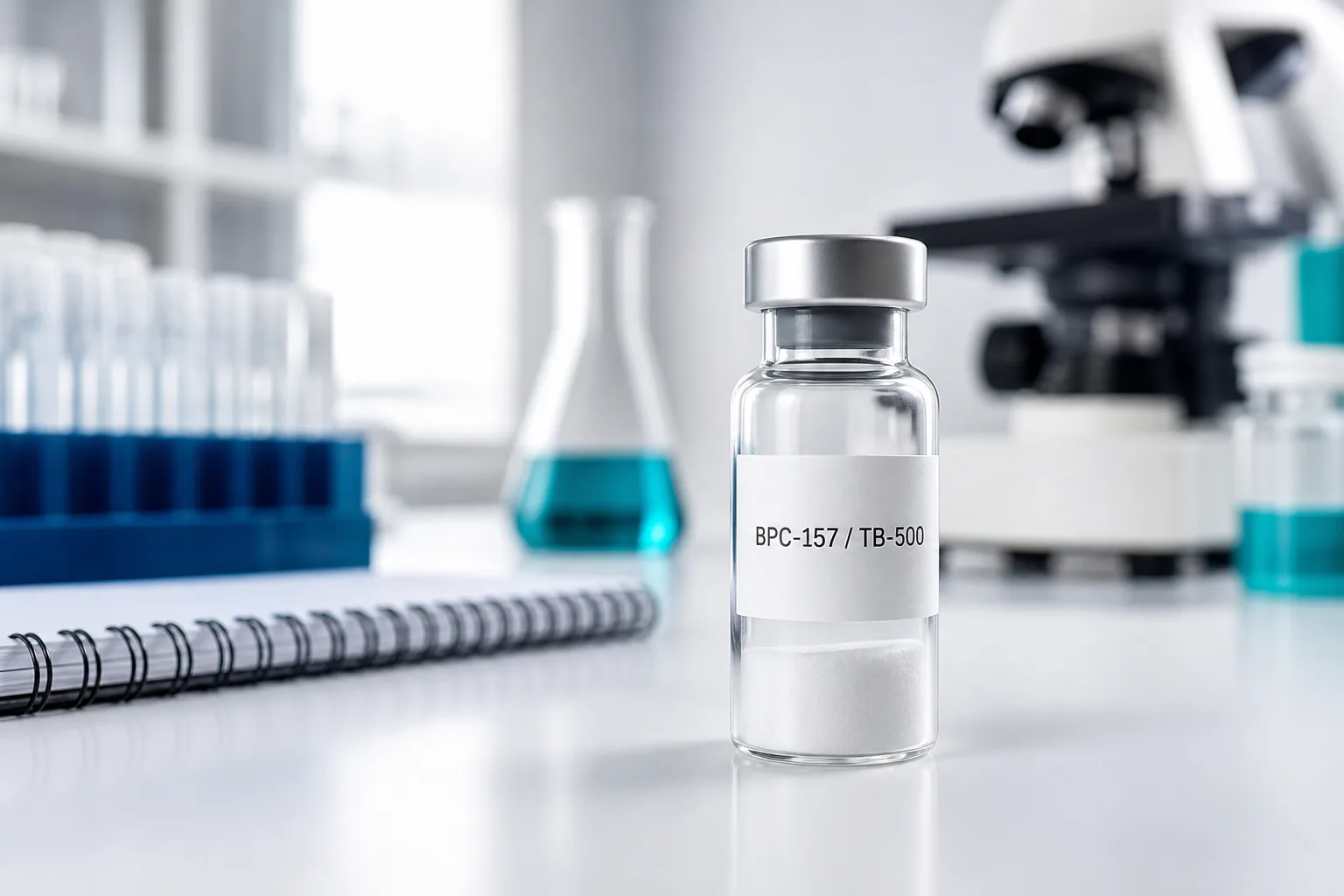
Storage and lot notes
The blend ships lyophilized. Store sealed vials at -20 C. Log diluent lot, target concentration, date, and operator so the prep still matches the batch COA.
References & Citations
- Sikiric P, Seiwerth S, Rucman R, et al. Stable gastric pentadecapeptide BPC 157: novel therapy in gastrointestinal tract. Curr Pharm Des. 2011;17(16):1612-1632.
- Esposito S, Deventer K, Goeman J, Van der Eycken J, Van Eenoo P. Synthesis and characterization of the N-terminal acetylated 17-23 fragment of thymosin beta 4 identified in TB-500, a product suspected to possess doping potential. Drug Test Anal. 2012;4(9):733-738.
- Goldstein AL, Hannappel E, Sosne G, Kleinman HK. Thymosin β4: a multi-functional regenerative peptide. Basic properties and clinical applications. Expert Opin Biol Ther. 2012;12(1):37-51.
- U.S. Food and Drug Administration. Certain Bulk Drug Substances for Use in Compounding That May Present Significant Safety Risks.
Author Profile

Tetrava Labs Editorial Team
Editorial Team, Tetrava Labs
Content published by Tetrava Labs is compiled and fact-checked using peer-reviewed scientific literature, HPLC-MS Certificates of Analysis (COA), and primary biochemical data. Research use only.
Frequently Asked Questions
Research Use Only Disclaimer
All products are intended for laboratory research purposes only. Not approved for human consumption, diagnostic use, or therapeutic applications. By purchasing, you confirm you are a qualified research professional.