Glow (30mg)
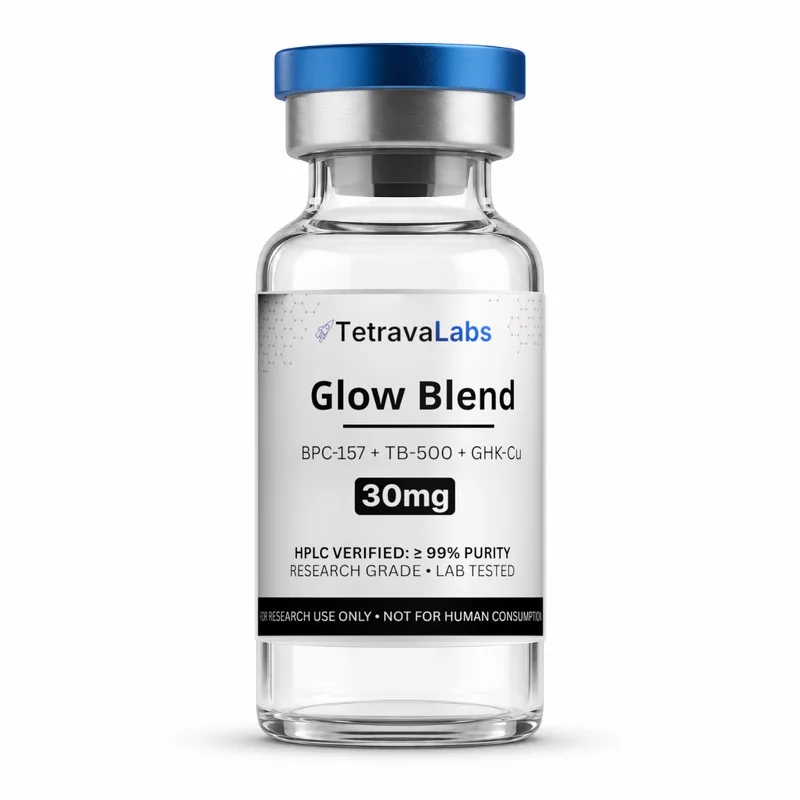
BPC-157 + TB-500 + GHK-Cu
For Research Use Only. Not for human consumption.
99%+ purity
$89.00 – $690.00
Buy Glow online from Tetrava Labs. Glow Blend combines BPC-157, TB-500, and GHK-Cu—three cornerstone peptides in tissue repair and skin-remodeling research.
- FREE shipping on all orders
- Guaranteed delivery to your doorstep
- Secure payment with card or crypto
- Enjoy discounts with every purchase
24/7 support — Email or WhatsApp
Select strength
1 / 5 / 10 vials
$690.00
$890.00
10 vials · $69.00/vial
You save $200
What is Glow?
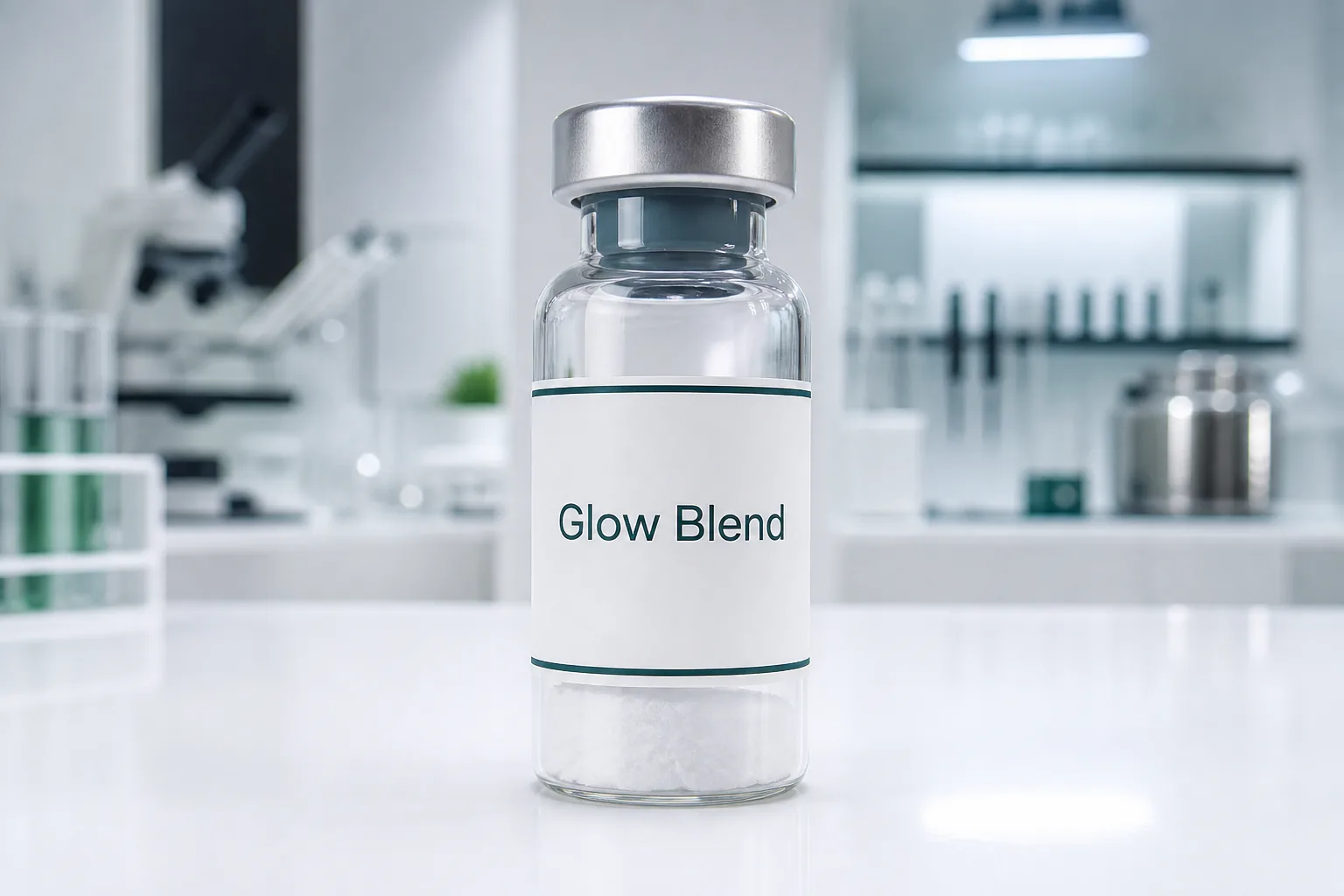
GLOW peptide is a marketing name for three lyophilized research peptides in one vial: BPC-157, the TB-500 fragment, and GHK-Cu.[1][2][3] The initials were borrowed. They do not name a receptor or a skin outcome.
Tetrava Labs supplies this GLOW blend peptide with its other research peptides for laboratory research only. Glow peptide where to buy should resolve to a three-peak, lot-linked COA. Research use only. Not for human or veterinary consumption.
Glow Peptide Research
What GLOW peptide contains, and why the name is not a mechanism
Three molecules. BPC-157 is the Zagreb pentadecapeptide studied in gastrointestinal and tissue-repair models.[1] TB-500 is the N-terminal acetylated 17-23 fragment of thymosin beta-4, not the full 43-residue protein.[2][4] GHK-Cu is the copper-binding tripeptide glycyl-L-histidyl-L-lysine, reviewed against fibroblast gene-expression datasets.[3]
GLOW peptides, as a search phrase, collapse those three literatures into one brand. A protocol still has to pick a readout that belongs to one of them. The blend does not invent a fourth pathway.
Is GLOW peptide safe?
This listing is Research Use Only. It carries no human safety label.
The FDA listed BPC-157 and the thymosin beta-4 fragment sold as TB-500 among bulk substances that may present significant compounding safety risks.[5] GHK-Cu sits in gene-expression reviews rather than that compounding docket.[3] Preclinical work on the three components does not license a skin-outcome sentence here.
The 2018 GHK-Cu gene-expression review behind the third component
Pickart and Margolina gathered microarray and related gene-expression data on GHK-Cu and mapped the copper tripeptide against collagen, antioxidant, and anti-inflammatory gene sets.[3] That paper is a synthesis of genomic readouts, not a cosmetic trial and not a blend study.
It is the published reason GHK-Cu is the third component people reach for when a two-peptide tissue-repair pair is not the question. The assay still has to name a gene or protein endpoint. Glow is not one.
GLOW blend peptide vs the two-peptide Wolverine vial
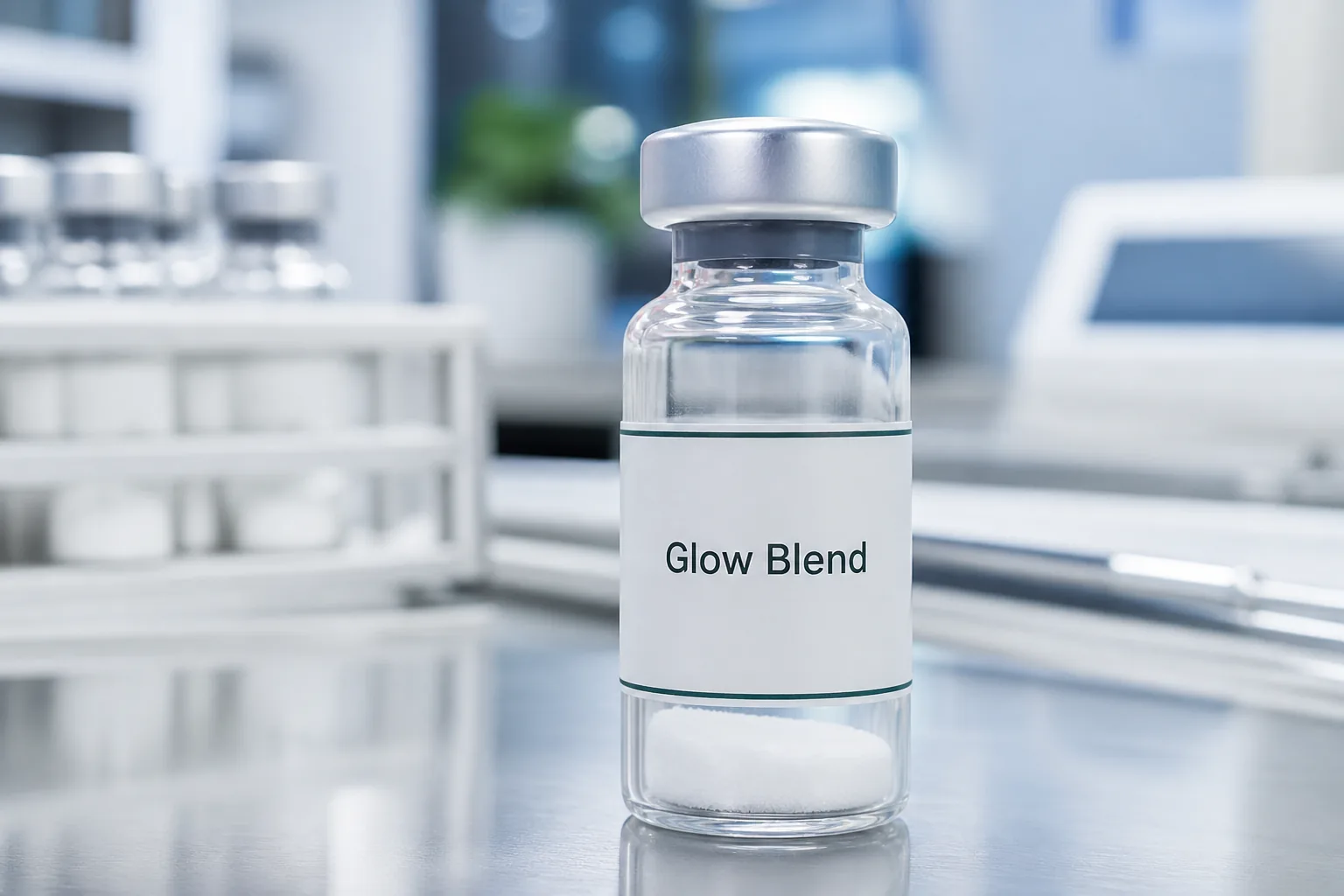
The two-peptide Wolverine blend stops at BPC-157 and the TB-500 fragment. GLOW keeps those two and adds GHK-Cu. Side by side, the variable is the copper tripeptide, not two unrelated products.
The chromatogram is the check. GLOW resolves three peaks. A two-component vial resolves two. If a label says GLOW and the COA does not show GHK-Cu, the name is doing all the work.
Glow peptide buy online
Confirm BPC-157, the TB-500 fragment, and GHK-Cu on the same lot Certificate of Analysis. Three names on a carton without three matched peaks is catalog copy. Tetrava lists 30 mg, 70 mg, and 85 mg blend vials.
Glow peptide price is a vendor field. Identity is a chromatogram. The compounding-risk listing on two of the three components is another reason this SKU stays RUO.[5]
Storage and lot notes
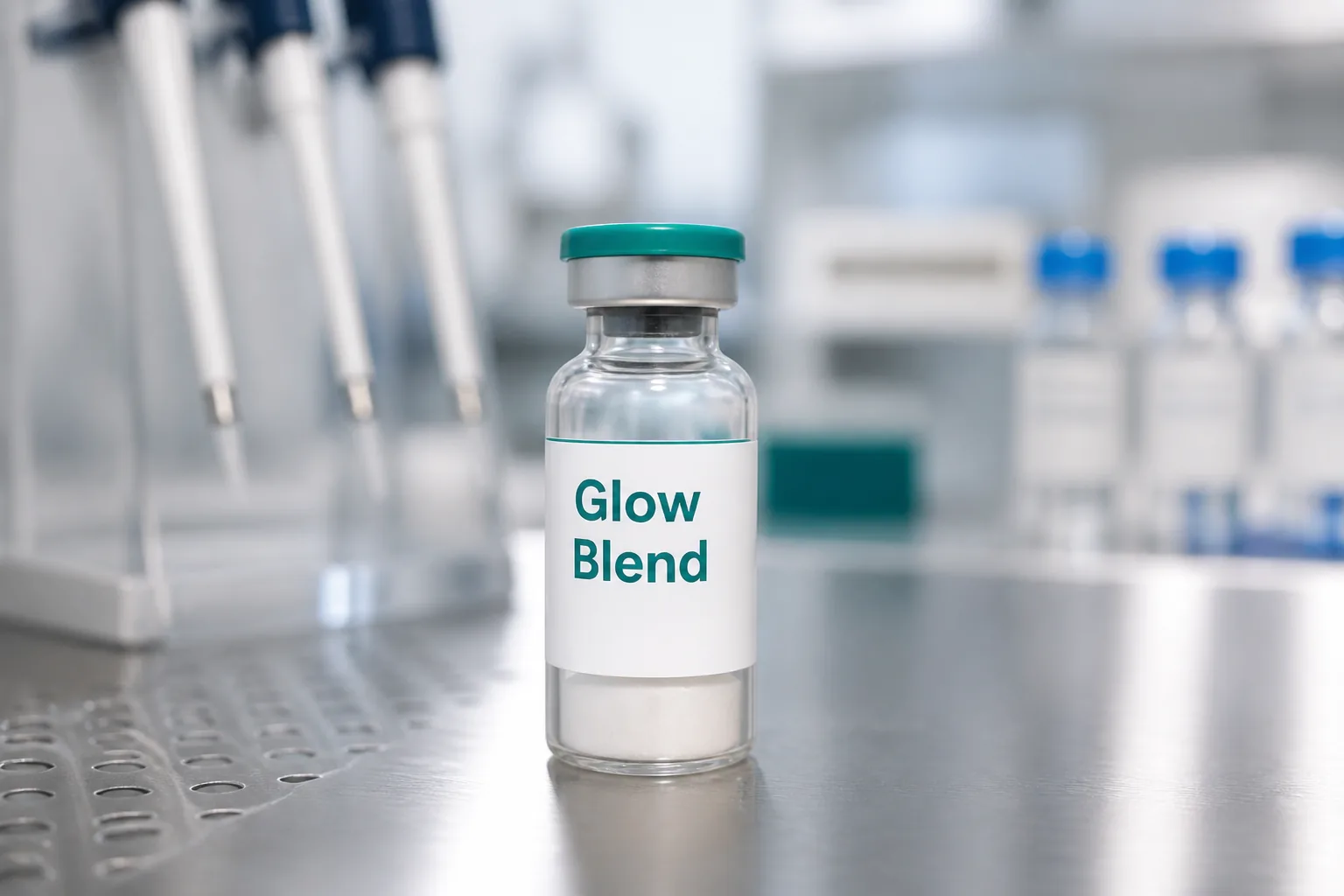
GLOW ships lyophilized. Store sealed vials at -20 C. Record diluent lot, concentration targets, date, and operator against the batch COA.
References & Citations
- Sikiric P, Seiwerth S, Rucman R, et al. Stable gastric pentadecapeptide BPC 157: novel therapy in gastrointestinal tract. Curr Pharm Des. 2011;17(16):1612-1632.
- Esposito S, Deventer K, Goeman J, Van der Eycken J, Van Eenoo P. Synthesis and characterization of the N-terminal acetylated 17-23 fragment of thymosin beta 4 identified in TB-500, a product suspected to possess doping potential. Drug Test Anal. 2012;4(9):733-738.
- Pickart L, Margolina A. Regenerative and Protective Actions of the GHK-Cu Peptide in the Light of the New Gene Data. Int J Mol Sci. 2018;19(7):1987.
- Goldstein AL, Hannappel E, Sosne G, Kleinman HK. Thymosin β4: a multi-functional regenerative peptide. Basic properties and clinical applications. Expert Opin Biol Ther. 2012;12(1):37-51.
- U.S. Food and Drug Administration. Certain Bulk Drug Substances for Use in Compounding That May Present Significant Safety Risks.
Author Profile

Tetrava Labs Editorial Team
Editorial Team, Tetrava Labs
Content published by Tetrava Labs is compiled and fact-checked using peer-reviewed scientific literature, HPLC-MS Certificates of Analysis (COA), and primary biochemical data. Research use only.
Frequently Asked Questions
Research Use Only Disclaimer
All products are intended for laboratory research purposes only. Not approved for human consumption, diagnostic use, or therapeutic applications. By purchasing, you confirm you are a qualified research professional.